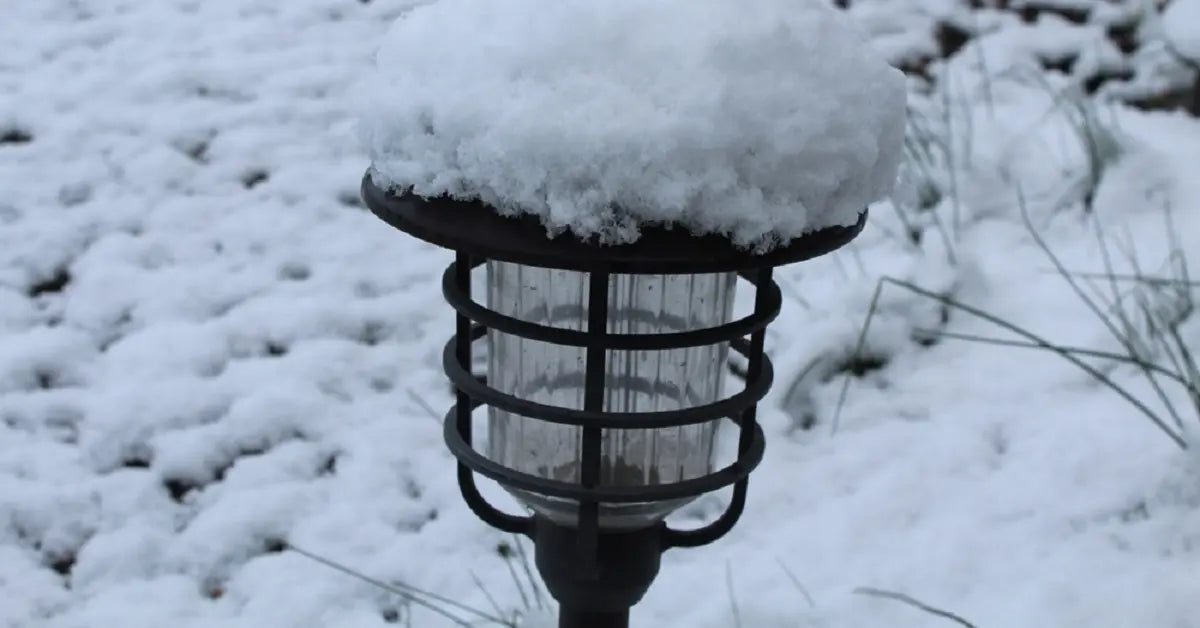
Winter is brutal on outdoor lighting.
Freezing temperatures, heavy snow, and only eight hours of weak daylight — it's a triple threat that kills underprepared solar lights fast.
The good news? A little prep goes a long way.
The Short Answer: How To Protect Your Solar Lights in the

Turn them off, remove the batteries, and store them somewhere dry and cool — like a garage or shed.
If you're leaving lights outside, clean the panels regularly, wipe off snow after each storm, and seal the circuit board with clear nail polish to block moisture and corrosion.
Which approach is right for you depends on what the light is actually for. Let's walk through both.
Scenario A: Storing Your Decorative Lights (The Safest Route)
Cheap pathway stakes, glass globe lights, and lightweight decorative fixtures were never designed for deep-freeze conditions.
For these, bringing them inside is the right call.
Indoor Storage and Battery Maintenance
Before you pack anything away, wipe each fixture down with a dry cloth.
Storing a damp light creates the perfect environment for mold and corrosion to develop quietly over winter.
Wrap any glass components in bubble wrap. Even small cracks from rough storage can let moisture in come spring.
Always pull the batteries out. A battery left inside a cold, damp housing will eventually leak — and that acid can destroy the circuit board beyond repair.
For a deep dive on storage charge levels and why 40–60% is the magic number, check out my post on whether to remove batteries from solar lights before freezing.
Scenario B: Protecting Lights You Leave Outside (DIY Fixes)

Some lights are too large or too permanent to bring inside every winter.
Here's how to give them the best shot at surviving the cold.
Outdoor Maintenance and Strategic Placement
Clear snow off your solar panels after every significant storm.
Even a thin layer blocks enough light to drop charging efficiency by 30–80%. It takes thirty seconds and makes a real difference.
Adjust your panel angle for winter too. The sun sits lower in the sky from November through February, so tilting panels to around 60° helps capture more of that weak, low-angle light.
Point panels south and away from shadows cast by roof overhangs or bare tree branches. For the full science behind winter charging, my post on how solar lights perform during winter months covers it in detail.
The "Nail Polish" Hack: DIY Waterproofing for Circuit Boards
This is the trick most people don't know about.
Open up your light's housing and apply a thin coat of clear nail polish directly over the circuit board's solder points and chip pins. It creates a moisture barrier that blocks the electrochemical corrosion that happens when water bridges two contact points.
It sounds low-tech because it is — but it genuinely works.
Here's why sealing matters so much. When moisture seeps into a cheap plastic housing and then freezes overnight, that water expands by about 9% in volume.
That expanding ice pushes outward against the casing, the panel, and the circuit board. Over multiple freeze-thaw cycles, it literally cracks the fixture from the inside out.
This internal expansion is one of the top reasons why outdoor solar lights fail quickly — and it's almost entirely preventable with proper sealing.
The Winter Security Dilemma: You Can't Store Your Floodlights

Why Security Matters Most During Long Winter Nights
Here's the problem with winterizing your security lights: winter is exactly when you need them most.
Nights stretch to 14 hours or longer. Driveways are icy. Visibility is low.
Putting your floodlights in storage means leaving your home's entry points dark during the season when that matters most. Decorative lights can hibernate. Security lights can't.
Built for the Freeze: Intelamp's 12000mAh Linkable Flood Light
This is where the DIY hacks run out of road.
Clear nail polish is fine for a $12 pathway light. It's not a substitute for real engineering.
Cold weather increases a battery's internal resistance and speeds up natural self-discharge. A small 1500mAh battery that's already struggling in October will be nearly useless by January.
The Intelamp 3000LM linkable solar flood light runs a massive 12000mAh battery. Even after cold weather takes its toll, there's still plenty of power to run through a long winter night.
The IP65 waterproof rating means no nail polish hacks required. It's factory-sealed against snow melt, freezing rain, and the repeated freeze-thaw cycles that destroy cheaper fixtures from the inside out.
The linkable technology is a genuine winter feature too. With snow on the ground, you don't want to be walking around repositioning lights. Link multiple units together and your entire driveway lights up from a single motion trigger — before you even step outside.
Upgrade to Winter-Ready Outdoor Lighting
If you've spent a few winters doing the pack-up, unpack, clean, reinstall routine — you already know how much time it burns.
At some point, upgrading to a light built for year-round use makes more sense than replacing cheap fixtures every other spring.
Browse our winter-proof solar outdoor lights and find something built to last through every season, not just the easy ones.
Quick-Reference: Winter Solar Light Protection
| Light Type | Best Approach |
|---|---|
| Decorative path stakes | Remove batteries, store indoors |
| Glass globe lights | Wrap and store, pull batteries |
| Mounted floodlights (budget) | Nail polish seal, clear panels often |
| Security lights (Intelamp) | Leave outside — it's built for this |
FAQ
Should I turn off solar lights in winter?
Yes, if you're storing them. Turn them off before removing the batteries to prevent residual discharge. If leaving them outside, keeping them on is fine — they'll still respond to motion and dusk signals as normal.
Does cold weather damage solar lights?
It can. Freezing temps reduce battery capacity and — if moisture has gotten inside — cause ice expansion that physically cracks housings and panels. Quality sealing and high-capacity batteries both help significantly.
How do I stop my solar lights from corroding in winter?
Remove batteries before storage, dry everything thoroughly, and use clear nail polish on circuit board contacts for outdoor fixtures. For a permanent fix, look for fixtures rated IP65 or higher.
Can solar lights charge in winter?
Yes, but less efficiently. Short days and low sun angles reduce charge intake. Keeping panels clean, angled correctly, and pointed south helps maximize what little sunlight winter offers.