I've tested solar lights through countless gray Seattle mornings, and I get asked this question constantly: "Do my solar lights even work when it's cloudy?" The short answer might surprise you.
The Short Answer: Do Solar Lights Charge on Cloudy Days?
Yes, solar lights charge on cloudy days, but much more slowly because they are designed to capture diffuse light. Here's what actually happens under those gray skies.
It's a common misconception that solar panels become completely useless without direct sun blazing down. The reality is more nuanced. Cloud cover reduces sunlight intensity, causing panels to collect less energy than on clear days.
Depending on cloud thickness, panels typically generate about 10% to 25% of their normal output. Even on gloomy, grey days, your solar panel lights still get charged due to scattered light hitting the photovoltaic (PV) cells.
Think of it this way: cloudy doesn't mean dark. Your eyes can still see perfectly fine on overcast days, right? Solar panels work similarly—they're just capturing a weaker signal.
The Science: How Solar Panels Harvest "Diffuse Light"

Here's where it gets fascinating. Solar panels don't actually need heat—they need light photons. Even when the sun is completely obscured, PV cells are specifically designed to capture what we call diffuse light.
Understanding Diffuse Irradiance
Sunlight reaches Earth in two primary forms. Direct Irradiance is the straight-line path from sun to panel—this is your optimal charging scenario. Diffuse Irradiance, however, is light that's been scattered by clouds, atmospheric particles, or weather conditions.
On cloudy days, those clouds act like a massive softbox in photography. They're not blocking all the light—they're scattering it in every direction. The sun's photons are still penetrating through, just taking indirect routes to reach your panel.
This is why solar panels can still function. They're engineered to capture this ambient, scattered light even when direct sunlight is blocked.
The Efficiency Factor
Not all solar panels handle diffuse light equally. Monocrystalline silicon solar cells are known for their superior efficiency and performance under cloudy or low-light conditions compared to other panel types.
But here's the catch: efficiency drops significantly. While a quality panel might operate at 20% efficiency under direct sunlight, that same panel might only achieve 2-5% efficiency on a heavily overcast day.
Why Battery Capacity Becomes Critical
Since charging is less efficient on cloudy days, the battery becomes your survival mechanism. The rechargeable battery stores electricity generated during sunnier periods, creating a crucial buffer against extended cloudy weather.
This is exactly why we engineered our systems with massive battery reserves. Without adequate storage capacity, even the best solar panel becomes useless during prolonged gray spells.
To understand the difference between direct and indirect sunlight and their impact on charging, check out our detailed guide on direct sunlight requirements.
4 Proven Ways to Maximize Charging in Overcast Weather

I've spent years optimizing solar installations in less-than-ideal conditions. These strategies actually work.
1. Clean Panels Religiously
Dirt, dust, debris, and snow can reduce panel efficiency by 25-40%. On cloudy days when you're already working with reduced light, every percentage point matters.
Wipe panels monthly with a damp, lint-free cloth. After storms or pollen season, clean immediately. This simple maintenance often doubles charging efficiency in low-light conditions.
2. Eliminate Every Shadow
Here's something most people don't realize: solar cells are typically wired in series. This means even a small shadow can drastically reduce the entire panel's power output.
Position panels where they receive maximum ambient light throughout the day. Trim back trees, relocate away from building shadows, and avoid placement near tall hedges or fences. On cloudy days, you're fighting for every scattered photon.
3. Bigger Panels = More Light Capture
Physics is simple here: larger surface area absorbs more solar energy. If you live in perpetually gray regions (I'm looking at you, Pacific Northwest), choosing products with oversized panels and high-capacity batteries is non-negotiable.
A 10W panel will always outperform a 5W panel on cloudy days, even if both are equally efficient.
4. Have a Backup Plan
When natural light is scarce for extended periods, alternative charging methods become essential:
- USB/Mains Power: Many modern solar lights include USB ports or power connectors. Plug into a standard outlet, computer, or power bank when needed.
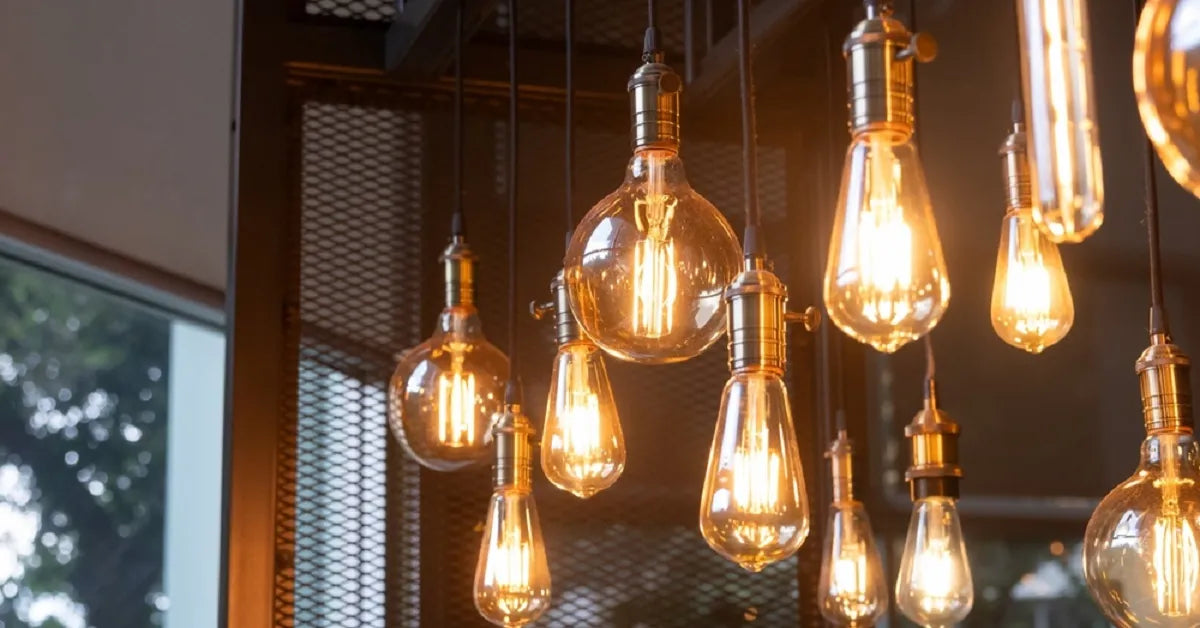
- Incandescent Bulbs: A 60W to 100W bulb positioned 12-18 inches from the panel for 8-12 hours can provide emergency charging.
- LED Lights: High-output LED bulbs work too, though less efficiently than incandescent. Headlamps or work lights positioned close to panels can help.
Need immediate charging solutions? Read our comprehensive guide on tips for charging without the sun for alternative methods that actually work.
The Ultimate Solution: Choosing Lights Built for Bad Weather

After years of customer feedback, I've learned something crucial: the lights that work on cloudy days aren't the cheapest ones. They're the ones engineered specifically for weather resilience.
Why Battery Capacity is Your "Rainy Day Fund"
Think of battery capacity like a water reservoir. On sunny days, you're filling it up. On cloudy days, you're drawing from reserves.
The industry term is "Autonomy"—how many days your light can operate without any solar charging. For reliable outdoor lighting, you want minimum 5-day autonomy.
This is why we designed the Intelamp 20000mAh solar flood light with such massive storage. A 20,000mAh battery provides critical reserve energy, ensuring consistent operation for multiple nights even when subsequent days are too cloudy for full recharging.
Most cheap solar lights have 2,000-4,000mAh batteries. Do the math: that's 5-10x less reserve capacity. On cloudy days, they simply die.
The "Light Hunter" Advantage: Separated Panel Design
Here's a problem I see constantly: people install solar lights in convenient locations—under eaves, near doorways, along shaded pathways. But convenient doesn't mean optimal for sun exposure.
Our solution? The 16.4ft separated cable on Intelamp's high-capacity solar security lights.
This flexible cable lets you "chase the light." Mount the panel on your roof, on an unobstructed pole, or in the sunniest corner of your property—while keeping the light fixture exactly where you need illumination.
I've seen this single feature double real-world performance in partially shaded yards. You're no longer compromising between ideal lighting location and ideal panel placement.
Combined with IP65 waterproofing for durability against rain and snow, these systems are engineered specifically for all-weather reliability.
The Complete Weather-Resistant Package
When you combine three elements—oversized battery capacity, separated panel flexibility, and monocrystalline efficiency—you create a system that genuinely works in challenging conditions.
That's not marketing speak. That's engineering designed around real-world weather patterns.
Explore our complete collection of reliable outdoor solar lighting solutions designed for energy independence, regardless of cloud cover.
FAQs
How to charge solar lights when it's cloudy?
Position panels south-facing in open areas and clean them regularly to remove debris. Use 60-100W incandescent bulbs positioned close for 8-12 hours for emergency charging. Many modern lights also include USB charging ports for backup power.
Do solar lights work if it's cloudy?
Yes, they capture diffused light at 10-25% of sunny-day output. Modern systems use intelligent controllers and high-capacity batteries to maintain operation. Lights with good battery autonomy continue working normally for days without direct sun.
Do solar lights charge in the shade?
They can technically charge but effectiveness drops 80-95%. Partial shade significantly lowers entire system performance due to series wiring. Plan installations to avoid obstructions during peak hours (10am-2pm).
How long do solar lights take to charge?
Under direct sunlight, most need 4-10 hours for full charge. Artificial indoor lighting takes 8-12 hours or longer. On cloudy days, expect 2-4x longer charging times for the same energy storage.
Related Resources
Do Solar Lights Need Direct Sunlight? The Complete 2025 Answer
How to Charge Solar Lights Without Sun: 7 Methods + Ultimate Solution
How Do Solar Lights Work? The Ultimate Simple Step-by-Step Guide