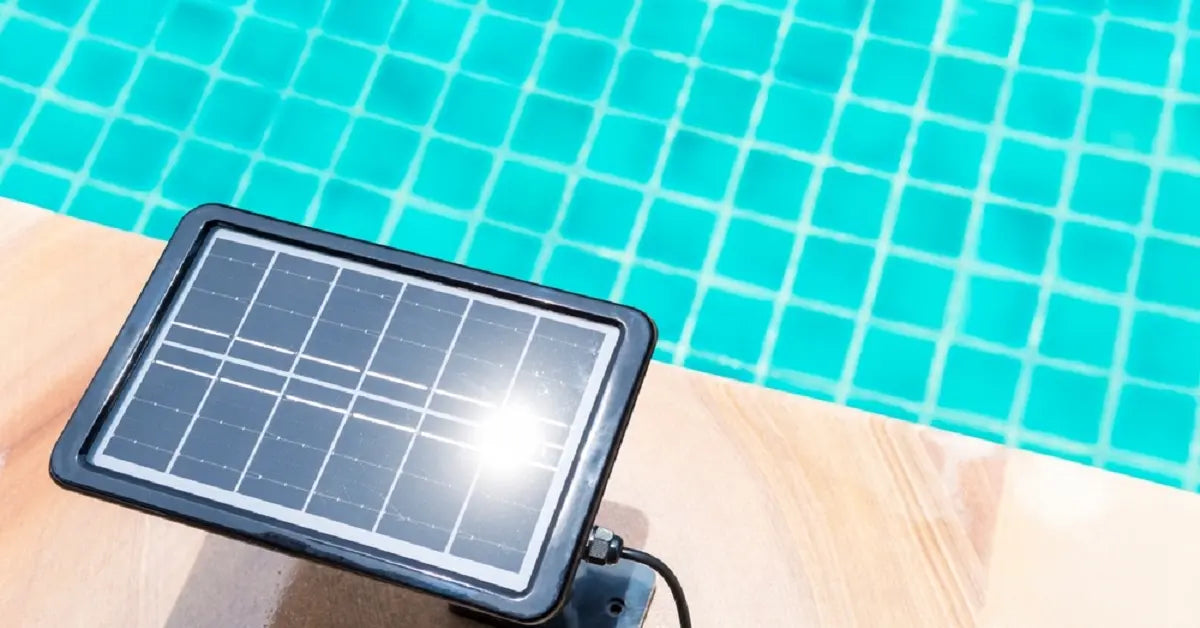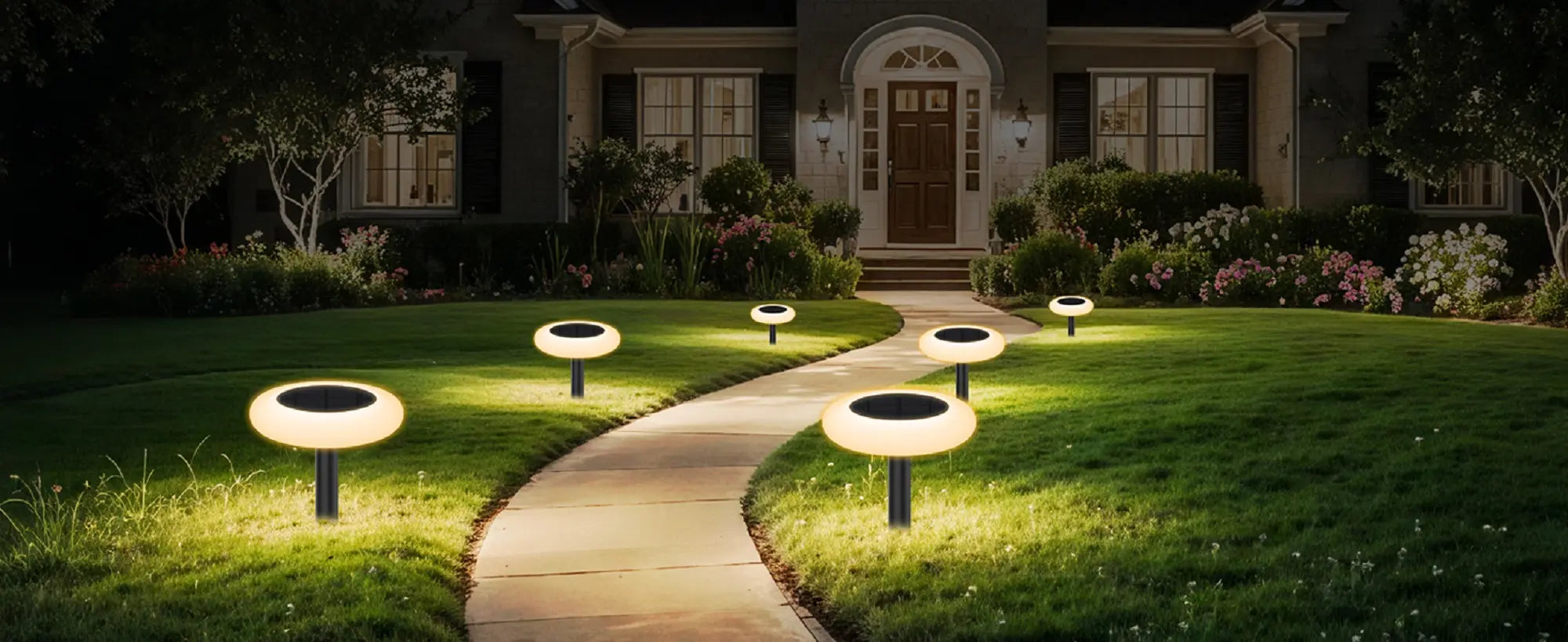

Most people assume solar lights are the safer choice — no wiring, no electrician, no 120V running through your yard. And mostly, they're right.
But "mostly" isn't the same as "always." After a solar deck light caught fire in Nashville in early 2026, it's worth understanding exactly what makes a solar light safe — and what doesn't.
The Bottom Line
Quality solar lights are genuinely safe for homes, children, and pets. They run on low-voltage DC power, carry no shock risk, and — when built with the right battery chemistry — pose minimal fire risk. The danger lives in cheap, uncertified units with poor internal components. Here's how to protect yourself:
- Look for LiFePO4 battery chemistry, not generic lithium-ion
- Check for CE, FCC, UL, or ETL certification marks
- Verify an IP65 or higher weatherproof rating
- Choose units with intelligent overcharge protection
- Never mount uncertified lights on flammable wood decks or dry brush
Solar Lights vs. Wired Systems: The Safety Advantage Is Real

Traditional outdoor lighting runs on 120V AC — or 240V in the UK and Europe. That's enough current to be lethal. A frayed wire, a flooded conduit, or a child touching the wrong thing can turn a garden light into an emergency.
Solar lights run on 3.2V–3.7V DC. That's roughly the same voltage as a AA battery. Even if a wire gets chewed through or a cable gets nicked by a lawnmower, the shock risk is negligible.
This low-voltage DC advantage is genuinely significant for family gardens. It's also why understanding how solar lights work at a basic level helps you spot when something's wrong before it becomes a problem.
The Real Risk: What Happened in Nashville

In February 2026, WSMV 4 Nashville reported a solar-powered deck light catching fire on a sunny afternoon — while the homeowners were inside.
The cause wasn't the sunlight. It was the battery, combined with a circuit that couldn't protect it.
Here's what happened at a technical level. The unit used a standard lithium-ion (NMC) cell — common in budget solar lights. NMC batteries have a thermal runaway threshold of around 150°C. Once a poorly designed charging circuit fails to cut off current after the battery is full, heat starts building.
On a dark-colored wooden deck in direct summer sun, surface temperatures can already reach 70–80°C. Add hours of uncontrolled overcharging on top of that, and you're pushing toward a dangerous threshold fast.
When NMC cells hit thermal runaway, they release oxygen internally. That oxygen feeds the combustion. Mounted on a flammable wooden surface, the burning plastic casing did the rest.
This isn't rare bad luck — it's a predictable failure chain. And it's entirely preventable with the right components.
The Battery Chemistry Difference: LiFePO4 vs. NMC

This is the single most important thing I can tell you about solar light safety.
Lithium Iron Phosphate (LiFePO4) batteries have a fundamentally different internal structure. Their olivine crystal lattice is chemically stable under heat — the thermal runaway threshold sits around 270°C, nearly double that of NMC cells. More critically, LiFePO4 batteries do not release oxygen during failure. No oxygen means no sustained combustion.
That's not marketing language. It's why LiFePO4 chemistry is used in EV battery packs, medical devices, and grid-scale solar storage — applications where a failure isn't just inconvenient, it's catastrophic.
Generic lithium-ion cells cost less at the factory level. That's why they appear in unbranded solar lights sold without any safety certification. The price difference is a few dollars per unit. The safety gap is substantial.
If a product listing doesn't specify the battery chemistry, treat that as a warning sign. And before buying any solar light, it's worth knowing whether the batteries are even replaceable — some units make this straightforward, others don't.
Overcharge Protection: The Circuit That Prevents Most Fires
Battery chemistry matters. So does the circuit managing it.
A solar light without overcharge protection keeps pushing current into the battery once it's full. On a long summer day with a strong panel, that's hours of excess charging stress. Even a LiFePO4 cell will degrade faster under those conditions. A cheap NMC cell is at genuine risk of failure.
Quality solar lights include a charge management IC — a small chip that monitors battery voltage in real time and cuts off current when the cell reaches capacity. This is standard in well-engineered units. It's absent in many budget options.
This is one of the most common setup mistakes I see: people buy the cheapest available unit and assume all solar lights are built to the same standard. They're not. The internal components vary enormously.
Child and Pet Safety: What the Numbers Actually Mean

Parents ask me this a lot — and the answer is straightforwardly reassuring.
At 3.2–3.7V DC, solar light wiring poses no meaningful electrocution risk. A child or pet that touches, licks, or even chews through a low-voltage wire is not in electrical danger. This is a genuine advantage over underground 120V landscape wiring.
The risks that do exist are mechanical, not electrical. Small screws, cracked plastic shards, and loose components can be choking hazards for very young children. Keep stake lights secured firmly in the ground, and check fittings periodically.
For pets specifically, the wire voltage concern is negligible. The chewing-through-plastic concern is more about fixture durability than shock risk.
A Fixture Built Around These Safety Principles

The intelamp Solar Security Floodlight with Dual Sensors was designed with the Nashville failure chain specifically in mind.
It runs on a 4000mAh LiFePO4 battery — stable under extreme summer heat, no swelling risk, no thermal runaway pathway. The enlarged monocrystalline solar panel achieves up to 25% conversion efficiency and includes intelligent overcharge protection that automatically cuts current when the battery is full.
The LED array delivers up to 1200 lumens without overheating, housed in an ABS engineering plastic casing with purpose-built heat dissipation. Dual motion sensors cover 180° of detection, and a full remote handles mode switching without requiring a ladder.
Intelamp holds a Guinness World Record for the largest display of solar-powered LEDs — which means we've engineered for safety at scale, across tens of thousands of simultaneous units. The component choices in this floodlight reflect that experience directly.
If you're unsure about leaving solar lights on all night, LiFePO4 chemistry combined with overcharge protection is exactly what makes extended overnight operation low-risk on a well-built unit.
How to Spot a Risky Solar Light Before You Buy
Here's my practical checklist — five things to verify before purchasing:
Battery type: LiFePO4 should be explicitly stated. "Lithium battery" alone tells you nothing useful and often means NMC.
Certification marks: CE, FCC, ETL, UL, or RoHS. Not a guarantee, but confirms the unit was tested against baseline safety standards. Zero certifications is a clear warning sign.
IP weatherproof rating: IP65 minimum for outdoor year-round use. Water ingress into a charging circuit is a direct path to short circuits and heat buildup.
Overcharge protection: Should appear in the product specifications. If it's not listed, assume it's absent.
Brand accountability: Does the company have a real website, genuine reviews, and a return policy? Brands selling unsafe products don't tend to maintain long-term customer service infrastructure.
Understanding why cheap solar lights fail early almost always comes back to these same omissions. The failures are predictable — and largely preventable with the right information.
FAQs
Are solar lights safe to leave on overnight?
Yes, if they use LiFePO4 batteries and include overcharge protection. These two features together prevent the battery from being over-stressed during long summer days. Generic lithium-ion solar lights carry more risk in this scenario, particularly in hot climates or when mounted on heat-absorbing surfaces.
Can solar lights actually catch fire?
Rarely — but it has happened, as the Nashville case documented. The cause is almost always NMC or LCO batteries combined with absent overcharge protection. Solar lights using LiFePO4 chemistry with proper charge management are not considered a meaningful fire risk under normal outdoor operating conditions.
Are solar lights safe around children and pets?
Yes. The 3.2–3.7V DC voltage solar lights operate on is not dangerous to touch, even with wet hands or in the case of a chewed wire. This is one of the clearest practical advantages over 120V/240V AC outdoor wiring. The precautions to take are mechanical — securing fixtures so small parts can't be accessed by young children.
Can I use regular batteries in solar lights?
No. Solar lights use rechargeable cells specifically matched to the fixture's charging circuit. Substituting regular alkaline batteries can damage the charge management system or create a heat risk. If you're wondering whether regular batteries are compatible, the short answer is they're not — and attempting it isn't worth the risk.
For intelamp's full safety-certified range, browse our best-selling outdoor lights or visit intelamp.com.