I've walked through a lot of yards at night. And the same problems show up again and again.
Blinding spotlights aimed straight at your face. Path lights lined up like a landing strip. Mismatched bulbs that make your garden look like a hardware store.
Good outdoor lighting shouldn't announce itself. It should make your home look naturally beautiful after dark — and most yards are one or two fixes away from getting there.
The Core Answer: What Are Common Outdoor Lighting Mistakes?

Common outdoor lighting mistakes include overlighting areas, creating harsh glare, improper fixture placement, using incorrect color temperatures, and neglecting maintenance.
The best designs avoid runway-style path lighting, use shielded fixtures to cut light pollution, and rely on warm-toned LEDs to build a welcoming, balanced atmosphere.
Let's go through all eight — and how to fix each one.
8 Outdoor Lighting Mistakes to Avoid

1. Overlighting — The "Vegas Effect"
More light is not better light. Flooding every corner of your yard with high-intensity fixtures washes out architectural texture, flattens shadows, and creates an atmosphere that feels more like a parking lot than a home.
Good lighting is about contrast. The darkness around a well-lit feature is what makes it beautiful.
2. Harsh Glare and Poor Aiming
An unshielded bulb pointed toward your guests' eyes isn't lighting — it's an obstacle. The fixture should illuminate the subject, not the viewer.
Always aim lights toward surfaces: walls, plants, pathways. If you can see the bare bulb from normal standing height, it needs to be repositioned or shielded.
3. "Runway" Path Lighting
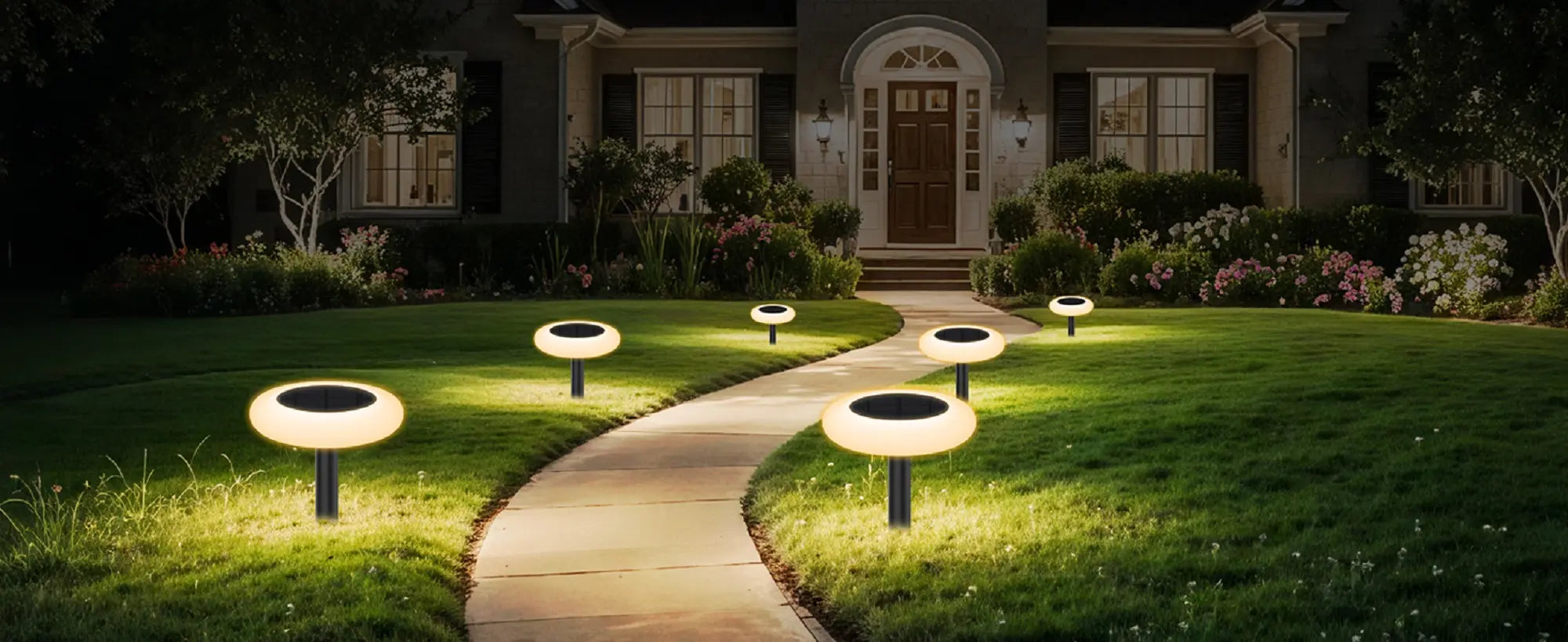
Evenly spaced path lights in a perfectly straight line look clinical and flat. It's the single most common mistake I see in suburban yards.
Stagger your path lights instead. Vary the spacing slightly. Let the light guide the eye naturally rather than marching it down a corridor.
4. Ignoring Color Temperature
Mixing a cool 6500K floodlight with warm 2700K accent lights creates a visual mess. Your yard ends up looking unintentional rather than designed.
Pick a color temperature and stick with it across a zone. Warm white (2700K–3000K) works beautifully for garden beds and entryways. Cooler tones (4000K–5000K) suit driveways and security areas better.
5. Poor Placement
Lights placed in front of a fast-growing shrub will be buried by spring. Fixtures mounted near a lawn edge will get clipped by a mower within a season.
Think about where the light needs to be in two years, not just today. And think about what the fixture is actually supposed to illuminate — not just where it's convenient to install. This is one of the less obvious reasons why outdoor solar lights fail quickly — bad placement leads to physical damage and chronic underperformance.
6. Using Improper Equipment
Cheap, non-weather-rated fixtures crack, corrode, and fade. A light that looks fine in the box will look terrible after one winter outside.
Always check IP ratings. For anything exposed to rain or sprinklers, IP65 is the minimum worth considering.
7. Neglecting Maintenance
A dirty solar panel can lose 30% of its charging efficiency. A fogged lens cuts output nearly as much. Neither problem is obvious until your lights start failing at 2 AM.
Build a monthly check into your routine — wipe panels, clear lenses, and make sure nothing's blocking the sensor. Wondering why your output has dropped? My guide on how to know if your solar light is actually charging walks through the diagnostic process.
8. Incorrect Sizing
A tiny stake light next to a two-story colonial looks absurd. An oversized floodlight mounted on a small garden fence looks aggressive.
Scale your fixtures to your architecture. The physical size of the light and its output should feel proportional to what it's illuminating.
The Designer's Playbook: How to Fix These Mistakes

1.Layer your lighting
Combine ambient, task, and accent lighting rather than relying on one type to do everything. A mix of wall washes, path lights, and uplights creates depth that a single bright floodlight never can. If you want to get more from what you already have, I cover practical tips on how to make your solar lights brighter without replacing anything.
2.Use timers or smart controls
Lights that run all night when no one is outside waste energy and contribute to light pollution. A motion-triggered or scheduled system gives you coverage when it counts and darkness when it doesn't.
3.Aim for contrast, not coverage
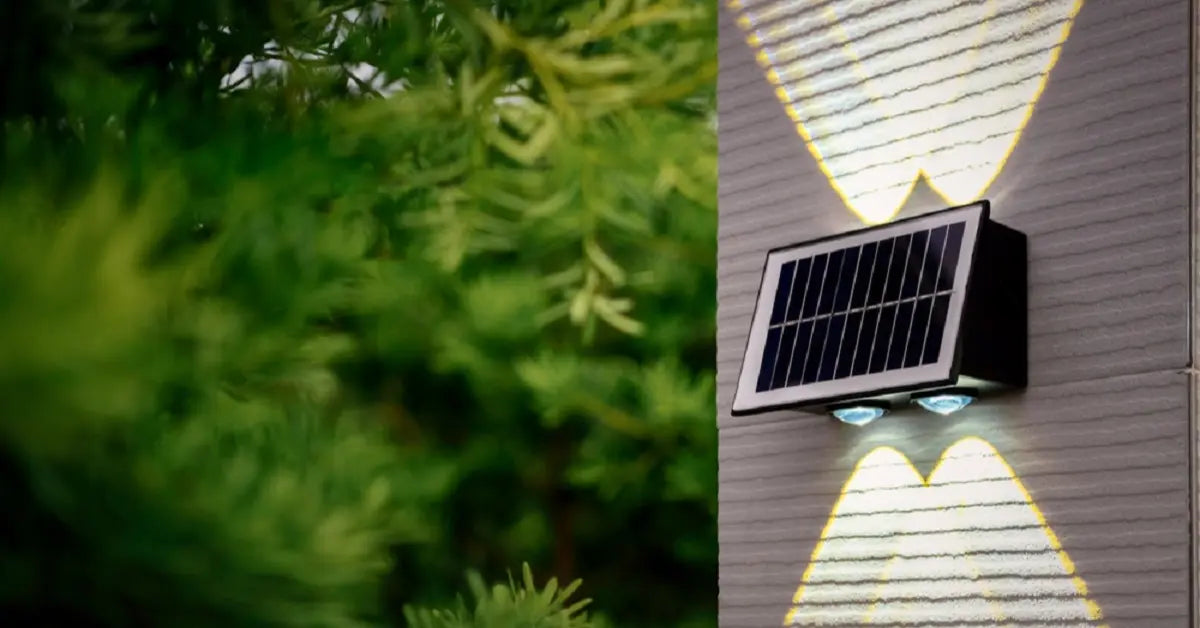
The "wall wash" technique — angling a light to graze softly across a textured surface — creates far more visual interest than a direct spot. Shadows are part of the design, not a failure of it.
4.Commit to LED
The color consistency, lifespan, and energy efficiency of quality LEDs make everything else easier. You stop replacing bulbs, you get predictable color temperature, and your running costs drop significantly.
A Word on Dark Sky Compliance
This one matters more than most people realize.
Upward-facing or unshielded lights scatter into the sky, contributing to the orange haze that blocks out stars above most cities. They also disorient nocturnal insects, birds, and other wildlife that depend on natural darkness.
The International Dark-Sky Association advocates for fixtures that direct light downward and shield the source from the sky. Beyond the environmental benefit, downward-aimed lighting simply looks better — it puts the light where you need it, not where you don't.
The Ultimate Fix: The Intelamp Split-Design Advantage

Here's the problem most solar lights create: you have to choose between placing the fixture where it gets sun, or where you actually need the light. Those two spots are rarely the same.
A pathway under an eave gets no sun. A garden bed under a tree stays dark all day. Traditional solar fixtures force you to compromise — and the result always looks like a compromise.
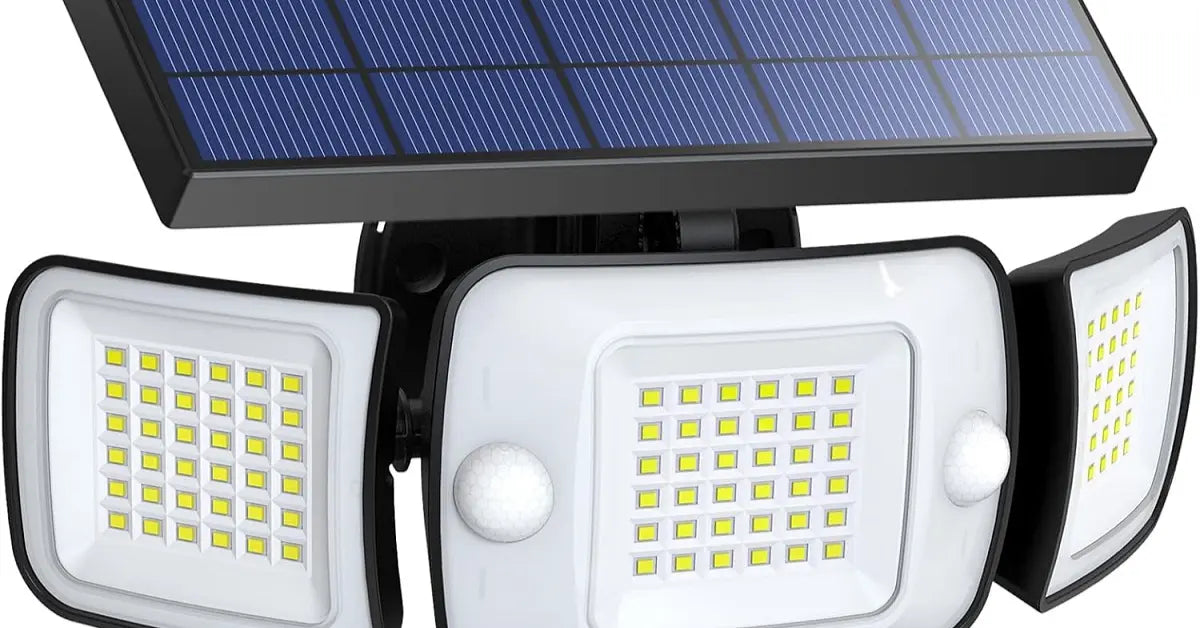
The Intelamp split solar security light solves this with a 9.8ft cable separating the panel from the fixture. Mount the panel on a sunny roofline or fence post. Place the light exactly where you need it — under a porch, beside a dark entryway, deep in a shaded garden bed. No compromise required.
The three adjustable heads let you aim each beam independently — toward a wall, down a path, or across a garden feature — without creating the harsh glare that ruins so many installations.
And if 1500LM feels too intense for a relaxed evening? The remote control dimming lets you pull it back instantly. Full security brightness when motion triggers it, soft ambient glow when you just want atmosphere. That's the fix for the Vegas Effect — not buying a weaker light, but having precise control over a powerful one.
Upgrade Your Landscape Lighting
If you're ready to move past trial-and-error and build something that actually looks designed, start with the right hardware.
Browse our smart solar outdoor lights — built for performance, designed for real yards.
And if you want to keep sharpening your approach, discover more resources and learn about solar lights in our full library of guides.