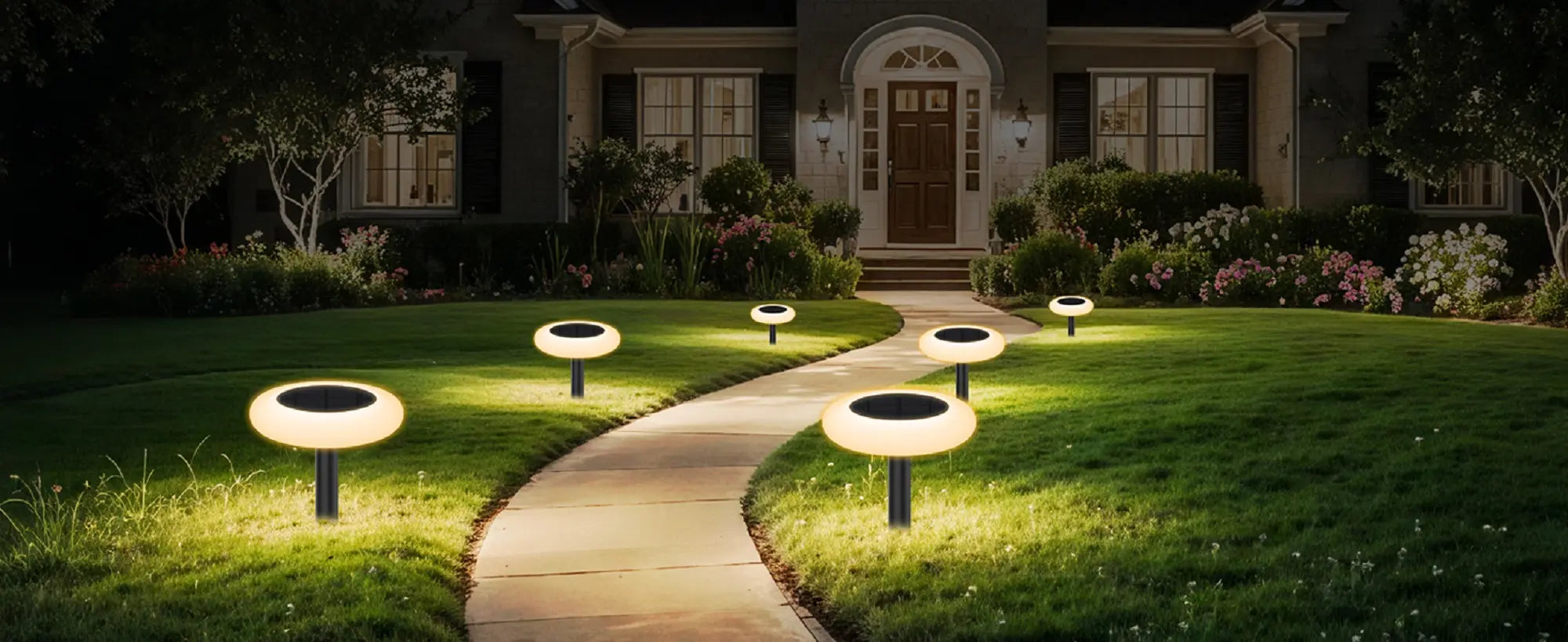
I know that feeling. You walk out to a dark garden path at night, and half your solar lights just aren't glowing anymore. Before you toss them in the trash, I want to show you what's actually going on inside those little fixtures.
The Quick Revival Verdict
Yes, most dead solar lights can be brought back. The usual culprits are a cloudy solar panel, a worn-out battery, or corrosion sitting on the contacts. A little cleaning, a fresh battery, and a hard reset fix the majority of cases.
Start With the Panel

The solar panel is the engine of the whole light. If it's dirty or cloudy, it just can't pull in enough sunlight to charge anything.
First, wipe it down with a soft microfiber cloth and a little dish soap. That clears off dust, pollen, and whatever else has settled on it.
If the panel still looks hazy underneath, that's a different problem. Cheap epoxy resin panels break down under UV light over time, a process called polymer photo-oxidation. It leaves behind that yellowish, frosted look you've probably seen on older fixtures.
Here's the trick: toothpaste or a headlight restoration polish works as a gentle abrasive. It buffs away that oxidized layer sitting on top of the resin. Once the panel looks clear again, seal it with a thin coat of clear UV-resistant spray, because without that protective layer, the haze creeps back within weeks.
Then Check the Battery
If the panel's clean and the light still won't turn on, the battery is probably next in line. Most solar lights use rechargeable NiMH or NiCd AA or AAA cells, and they typically only last one to two years.
Open the battery compartment and take a look at the contacts. White powdery residue there is potassium hydroxide leaking from the battery, and it disrupts the low-voltage current trying to pass through.
A cotton swab clears that residue right off. Swap in a fresh rechargeable battery that matches the original voltage and chemistry exactly. Regular alkaline batteries aren't built for this and can leak inside the housing, so understanding what battery types actually work is worth five minutes before you buy replacements.
The Hard Reset Most People Skip

Sometimes the fixture just needs a clean restart. Flip the switch to off and pull the batteries out completely.
Wait a full 30 seconds before putting anything back. That gap gives any internal capacitors time to fully discharge, which clears out glitches in the light's sensor circuitry.
Once you've reinstalled the battery, try the dark test. Cover the panel completely with your hand, and if the LED turns on, you know the sensor itself is working fine. From there, give it a full 6 to 8 hour charge in direct, unshaded sun.
When It's Genuinely Time to Replace It

Not every fixture is worth saving, and it's important to know where that line sits. Rusted internal wiring, a fried circuit board from water submersion, or battery terminals that have snapped off from heavy corrosion are all dead ends.
If you've cleaned the panel, swapped the battery, and done the reset, and the light still won't glow, something inside has likely shorted for good. At that point you're not fixing a light anymore, you're just delaying the inevitable, and a corroded unit can actually become a fire risk if you keep forcing it.
Why Cheap Fixtures Keep Dying on You
It helps to understand why this cycle happens in the first place. Cheap panels use that same UV-sensitive epoxy resin I mentioned earlier, so yellowing is basically built into the design.
Traditional PIR motion sensors have the same weakness. They rely on a plastic lens that sits exposed to sunlight and slowly turns brittle. If you're constantly diagnosing solar light failures on the same fixtures every season, this UV degradation is usually why.
A Fixture Built to Skip This Cycle

If you're tired of babying cheap lights every spring, this is where the intelamp Solar Motion Sensor Light (1200LM, Dual Color 3000K/6500K) comes in (check it out here). It uses a monocrystalline panel with up to 25% conversion efficiency, built specifically to resist the yellowing that ruins cheaper resin panels.
Instead of an exposed PIR sensor, it runs on 180° radar detection, catching motion within 26 feet from behind a sealed IP65 ABS casing. That housing also keeps rain, heat, and condensation away from the circuit boards entirely. You get 1200 lumens with a choice of 3000K warm white or 6500K daylight, adjustable through remote control.
It's a small detail, but intelamp does hold a Guinness World Record for the largest display of solar-powered LEDs, which says something about how these components perform when you scale them way up.
Before you decide whether repair or replacement makes more sense, it's worth checking if battery replacement pays off and testing whether your current light still works before you spend money either way.
Frequently Asked Questions
Is there a way to revive solar lights?
Yes, in most cases. Clean the oxidized panel, replace the rechargeable batteries, and give the unit direct, unshaded sunlight for at least six hours to fully charge.
What is the life expectancy of solar lights?
The LED itself can last over 25,000 hours, which is more than a decade of use. The rechargeable battery is usually the weak point and typically needs replacing every 12 to 18 months.
Why are my solar lights not bright anymore?
It's almost always a dirty panel blocking the charge or an aging battery that can't hold full voltage anymore. Cleaning the panel and swapping in a fresh battery usually brings the brightness right back.
How do you fix solar lights that don't work?
Start with a hard reset by switching it off and pulling the battery for 30 seconds. Clean the panel, check for any water damage inside, and replace the battery with a fresh one of the same type.