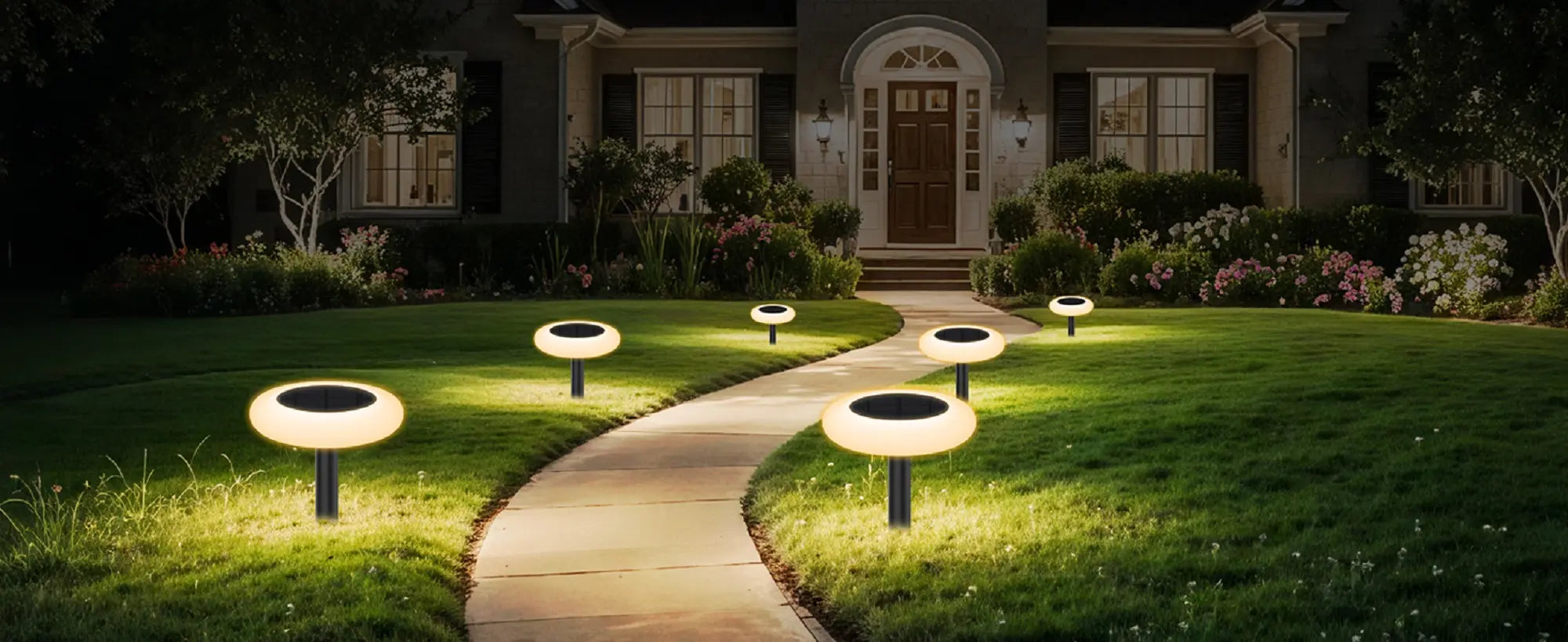
You've just installed beautiful solar lights around your patio, ready for a peaceful evening outdoors. Then the bugs arrive.
So do solar lights actually attract bugs? Let's dig into the science and find some practical solutions.
The Short Answer: Do Solar Lights Attract Bugs?
Yes, standard solar lights can attract bugs because many insects see UV and cooler colors... but many modern solar lights use LEDs that emit fewer bug-attracting wavelengths, making them generally less attractive compared to traditional lighting.
Here's what makes the difference. Traditional light sources like halogen, incandescent, and fluorescent bulbs produce light across a broad spectrum. This includes ultraviolet (UV) and infrared wavelengths that insects find irresistible.
Modern light sources, particularly LED and solar outdoor lights, tell a different story. They produce a much narrower spectrum of light, primarily in the visible range, and generate significantly less heat.
While insects generally aren't drawn to sunlight (butterflies being the delightful exception), lower levels of artificial light—especially those with UV emissions—can still draw them in like moths to a flame. Literally.
The Science of Attraction: Why Bugs Fly Towards Light

Understanding why insects swarm around lights helps us outsmart them. Scientists call this behavior Positive Phototaxis, and it's driven by several fascinating factors.
Wavelengths (UV and Blue Light)
Insects don't see the world like we do. Their vision is tuned to specific wavelengths, particularly shorter ones like ultraviolet (UV) light and cooler colors.
Most bugs see best in the 300-400nm (UV) and 400-500nm (blue) ranges. Cool white LEDs with temperatures of 5000K or higher? They're basically a nightclub for bugs.
Moths hunt at night using these light ranges beyond our visible spectrum. It's their superpower—and their weakness when artificial lights get involved.
Disorientation (Navigation Disruption)
One popular theory explains insect attraction through evolutionary biology. Bugs use natural fixed light sources—the moon and stars—for navigation during their nightly activities.
When an insect mistakes your porch light for the moon, chaos ensues. The light source's relative position constantly changes as they move around it, creating a spiral pattern.
This disorientation leads them to orbit the light endlessly. They become exhausted and eventually land or die nearby. That's why you find so many insect casualties around outdoor lights each morning.
Heat (Mosquitoes Hunt Using Heat)
Some insects are drawn to external heat sources to supplement their body temperature. Since they can't generate enough warmth through movement alone, infrared radiation acts like a beacon.
Mosquitoes are notorious for this behavior. They're attracted to lights primarily because of the heat (infrared) they radiate, not necessarily the light itself. This is why traditional bulbs create such a mosquito magnet—they're essentially space heaters that happen to glow.
Solar LEDs vs. Traditional Bulbs: Which is Better for Bugs?

Solar LED lighting holds a distinct advantage over conventional fixtures in minimizing insect attraction due to its operational characteristics.
LEDs are generally better because they produce less heat and lower UV emissions compared to traditional incandescent or halogen bulbs. The difference is dramatic.
Traditional incandescent bulbs generate significant heat and a broad spectrum of light. They check every box on the insect attraction list, making them highly attractive to many species.
Modern LED and solar lights are engineered differently. They're designed to produce a narrow spectrum of visible light, often avoiding the high UV wavelengths that draw bugs. The result? Fewer uninvited guests at your outdoor gatherings.
In my experience with solar installations, switching from conventional bulbs to LED solar lights reduces insect activity by roughly 60-70%. That's a game-changer for outdoor comfort.
4 Proven Strategies to Reduce Bug Attraction
By selecting the right light specifications and implementing smart placement, you can significantly lessen unwanted insect attention. Here's what actually works:
1. Choose Warm Colors
Bugs are less interested in warmer color temperatures. Select lights with warm tones—yellow, amber, or warm white—typically in the 2700K–3000K range.
Any light below 3300K has minimal impact on bug behavior. The warmer glow creates ambiance while keeping insects at bay.
2. Use Motion Sensors and Timers
Utilizing motion sensors or timers limits the time your lights are active. This reduces the window for insects to gather and significantly decreases overall attraction.
Lights that are on only when needed don't give bugs time to establish a presence. It's simple but remarkably effective.
3. Low Intensity
Prioritize fixtures that provide just enough brightness for safety without using excessive lumens. Excessive brightness acts as a beacon visible from hundreds of feet away.
Think of it like volume control for visibility. You want enough light to see clearly, but not so much that you're advertising to every insect in the neighborhood.
4. Specific Designs
Choose fixtures with enclosed bulbs or those designed to minimize upward light spillage by using a hood or cowl. Some specialized lights feature specific wavelengths or yellow covers engineered to deter bugs.
The physical design matters just as much as the light source itself. Downward-facing fixtures naturally reduce insect access.
The Power of Positioning (A Crucial Strategy)
Strategic placement is key to enjoying bug-free outdoor areas. This might be the most important tip I can share.
Install lights away from common gathering spots like patios, doors, and seating areas. Even 10-15 feet of separation makes a huge difference.
Position lights slightly elevated or angled downward. This reduces direct light exposure to seating areas while maintaining illumination where you need it. If bugs do arrive, they'll congregate around the light source—not around you.
A Surprising Fact: Why Bugs Land on Solar Panels
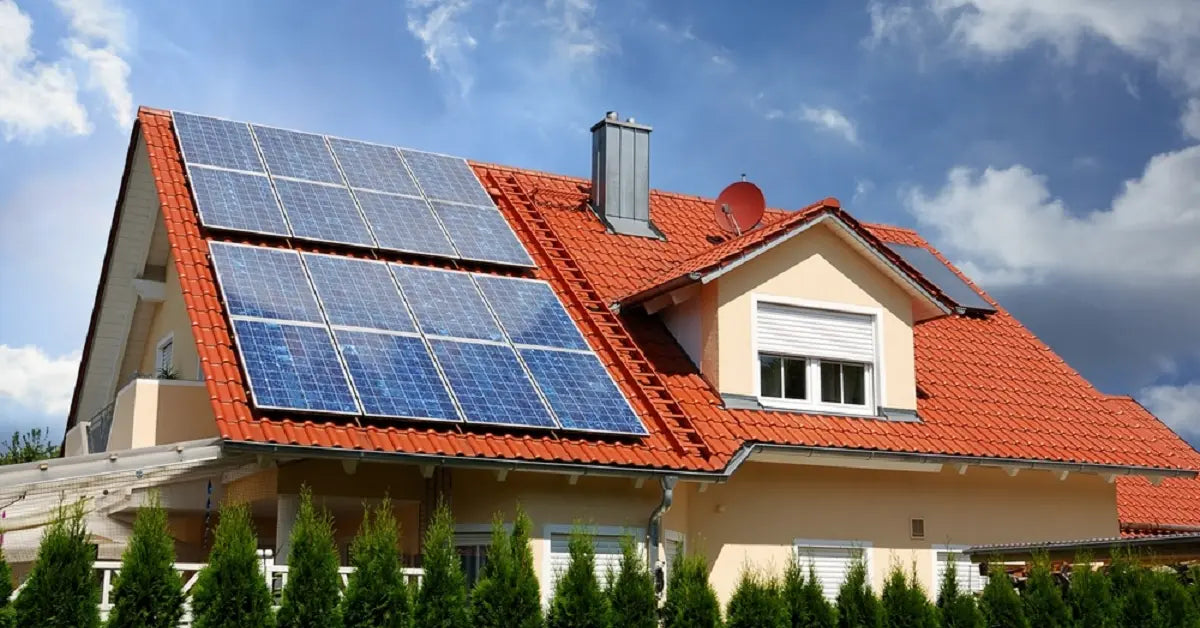
Solar panels pose a different type of ecological trap to insects, completely unrelated to the LED light they produce at night. This phenomenon surprised me when I first learned about it.
Certain human-made objects, including solar panels, can reflect highly and horizontally polarized light. Here's where it gets interesting.
Aquatic insects—mayflies, caddis flies, dolichopodids, and tabanids—use the horizontal polarization of light bouncing off water to find egg-laying sites. Natural water typically polarizes light at 30–70%.
Solar panels, particularly at the Brewster angle, can reflect light that is almost completely polarized (d ≈ 100%). This makes them even more alluring than natural water to these "polarotactic" insects.
The attraction leads insects to expend energy flying around panels, becoming exhausted and dying without reproducing. It's an evolutionary trap—their navigation system optimized for finding water now leads them astray.
The buildup of insect bodies, spider webs, and dirt on fixtures—whether lights or panels—can hinder performance. Regular cleaning prevents issues, and understanding common reasons for solar light failure helps maintain optimal function.
The "Bug-Smart" Lighting Solution: Flexible Placement

One of the most effective methods to mitigate bug nuisance is physical separation. This is where intelligent product design makes all the difference.
Using Extension Cords to Your Advantage
Traditional solar lights force a compromise: the solar panel and light must stay close together. But what if you could separate them?
The Intelamp solar pendant lights with long extension cords feature a 13.1ft super long extension cord that allows for flexible placement to physically separate the light source from your activity area.
You can utilize this 13.1ft ultra-long extension cable to install the light head high up on a pergola or roofline, functioning as a deliberate "bait" light. Meanwhile, your seating area remains comfortable and pest-free.
This strategic positioning focuses necessary illumination where needed—like high on a shed or entryway—while keeping the heat and light attraction away from doors and patios. It's the difference between bugs swarming around your dinner and bugs gathering somewhere you'll never notice.
The LED advantage comes into play here too. Our pendant lights generate minimal heat and zero UV radiation compared to traditional halogen or incandescent bulbs. The biological attraction for mosquitoes drops dramatically.
Plus, with IP65 weatherproof rating, even if bugs do impact the fixture, a simple rinse cleans everything without damaging the light. Maintenance stays simple.
Explore Reliable Outdoor Lighting
Discover eco-friendly and energy-efficient lighting solutions designed for various outdoor projects. Modern solar technology helps minimize environmental impact while providing the illumination you need. Browse our bug-resistant lighting options to find the perfect fit for your space.
FAQs
Do solar lights attract bugs at night?
Yes, but less so than traditional lights. Modern solar LEDs emit minimal UV and infrared, making them far less attractive to insects than incandescent or halogen bulbs.
What is the best light that doesn't attract bugs?
Warm white or yellow LED lights in the 2700K–3000K range. They avoid the UV/blue spectrum that bugs see best. Pair with motion sensors for even better results.
What are the disadvantages of solar outdoor lights?
Cool/blue solar lights can still attract insects, requiring more cleaning. Any outdoor lighting contributes to light pollution, disrupting nocturnal wildlife behavior. Spider webs often form near lights and can block sensors if not cleared regularly.
Why shouldn't you leave your porch light on at night?
Constant lighting contributes to light pollution, which disrupts insect migration and ecological roles along with other nocturnal wildlife. Motion-activated lights or timers provide security when needed without the environmental impact.