
I've seen it happen more times than I can count. Someone buys four solar path lights, installs them over a weekend, and by November they're dim, dead, or flickering by 9 PM. The frustrating part? The lights weren't defective. They were just the wrong choice for the yard.
Picking outdoor solar lighting isn't complicated — but it does require asking the right questions before you buy. Let me walk you through what actually matters.
The Bottom Line
- Choose outdoor solar lights by matching the fixture to the job: 10–50 lm for pathways, 300+ lm for security.
- Require IP65 weatherproofing at minimum, 8–10 hours of battery runtime, and a site with 6–8 hours of direct daily sun.
- For shaded yards or north-facing walls, always choose a fixture with a detachable solar panel on a cable.
Step 1: Know What You're Lighting — and Why

Before you look at a single spec, ask yourself: what is this light actually for?
The answer changes everything. Security lighting and garden accent lighting are completely different products. Using the wrong one for the job wastes money and leaves you disappointed.
Here's a quick breakdown by application:
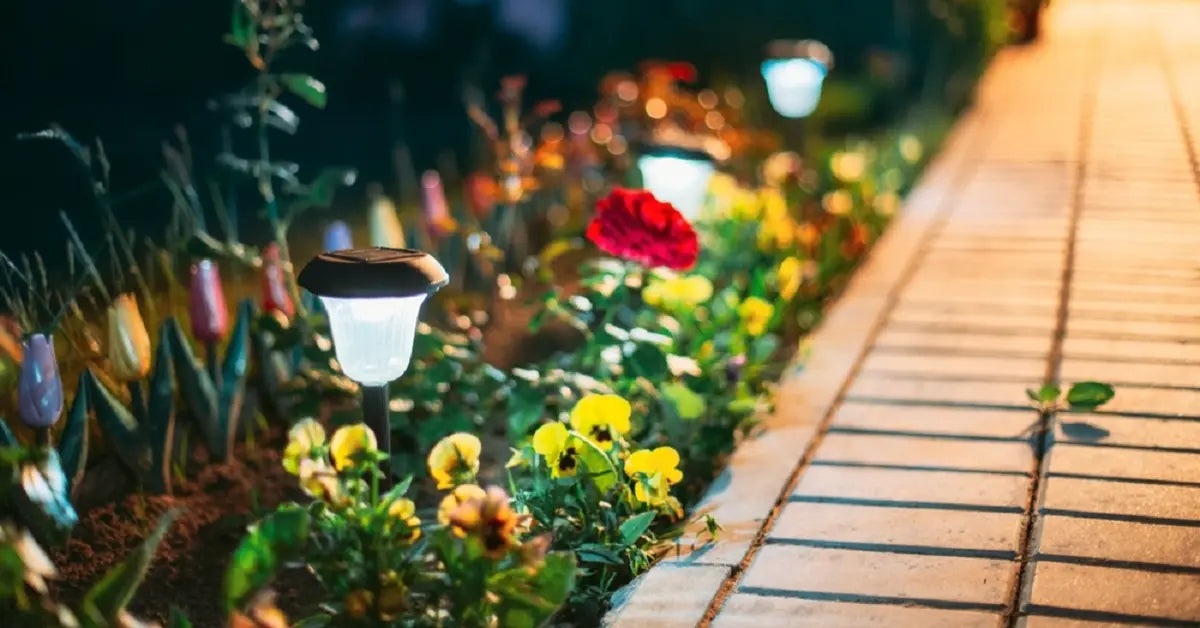
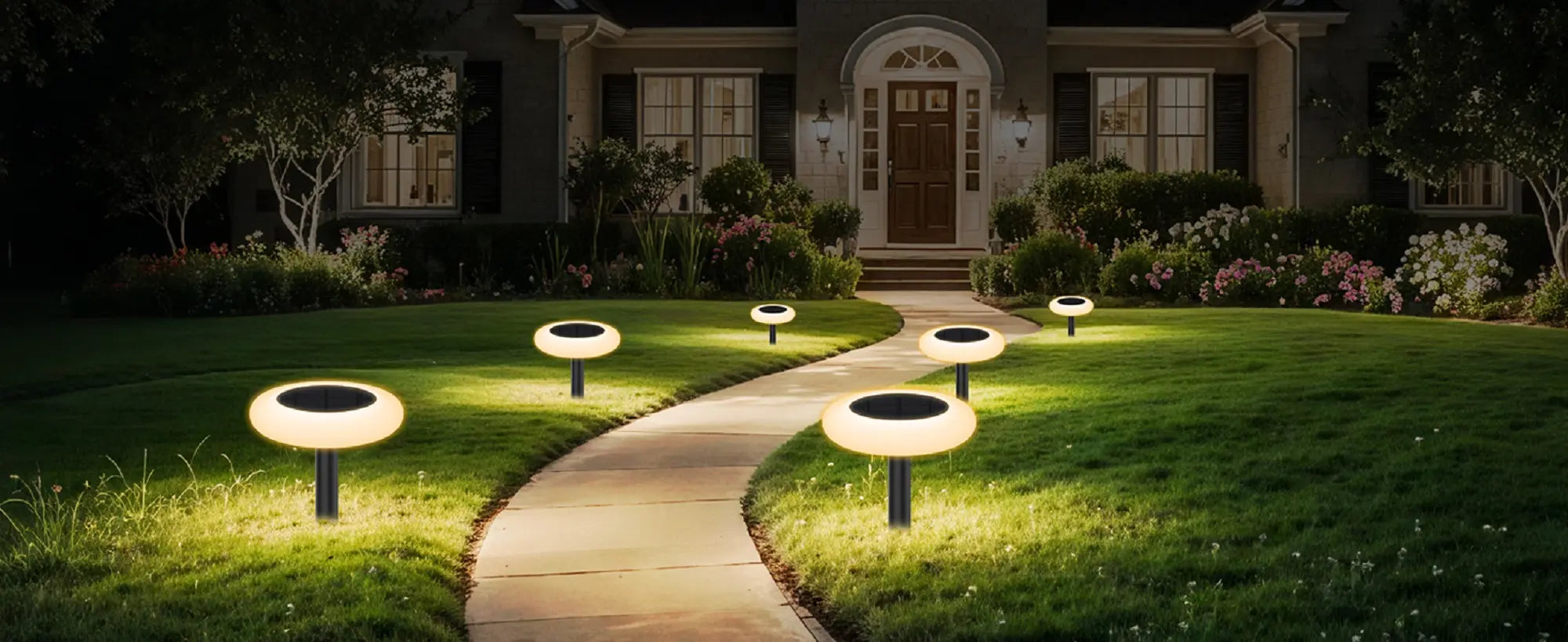
- Path and garden lights (5–50 lm): These define edges and add soft ambiance. They're not meant to flood your yard with light. If you push too many lumens here, you get glare and a drained battery before midnight.
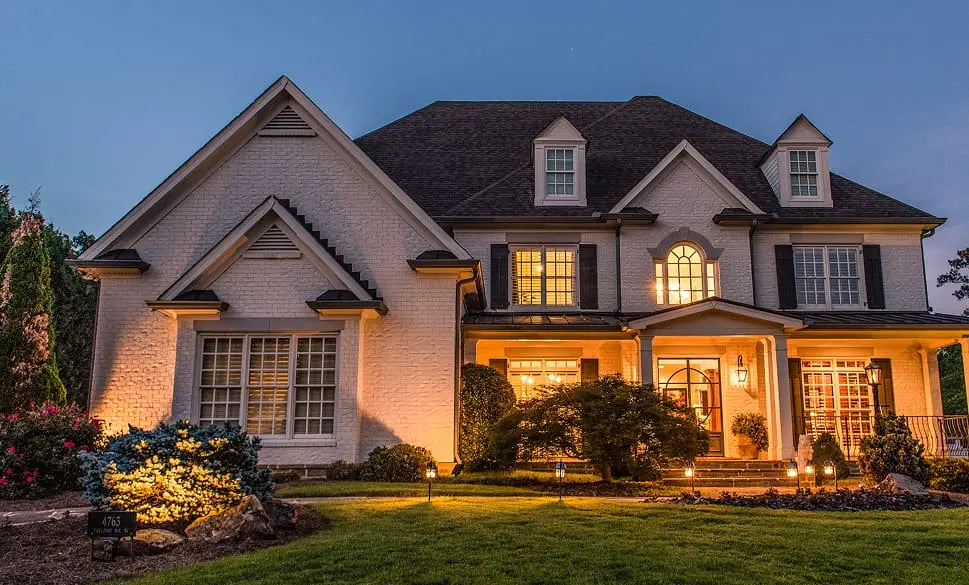
- Spotlights and uplights (50–200 lm): Great for highlighting a tree, a stone wall, or an architectural detail. Focused beam, directional output.
- Deck and fence lights: Low-output, decorative fixtures for railings and post caps. Their job is atmosphere, not visibility.
- Security floodlights (300–1,000+ lm): High-output, motion-activated fixtures for driveways, gates, and rear entryways. I'd always include motion sensing here — it preserves battery life and doubles as a deterrent.
Not sure what lumen count fits your space? I'd recommend reading up on appropriate lumen ranges for each task before committing to a purchase.
Step 2: Don't Skip the Weatherproofing Rating

IP ratings are one of those specs that buyers skim over. They really shouldn't.
The IP code has two digits. The first covers dust protection, the second covers water. For outdoor solar lights, you want at least IP65 — that means fully dustproof and protected against direct water jets from any direction.
IP44 is only suitable for covered patios. Install an IP44-rated fixture in an open garden bed and you're essentially inviting water into the housing. Within a season, the battery contacts corrode and the LED driver fails. This is exactly why so many solar lights fail early — not bad technology, just inadequate protection ratings.
Near irrigation systems or coastal environments, I'd go IP66 or higher.
Step 3: Battery Capacity Matters — But Runtime Matters More

A high mAh number on the box doesn't automatically mean long battery life. What matters is how the battery capacity compares to the fixture's power draw.
A 1,200mAh battery running a 15-lumen path light can outlast a 5,000mAh battery powering a 400-lumen floodlight at full output. Context is everything.
What I look for in a battery spec:
- 8–10 hours minimum runtime on a full charge. Anything less and you're looking at a light that dies before morning.
- Multiple modes. Motion-sensing, dim-then-bright, and low-constant modes are essential. Without them, the fixture runs at full draw all night and drains out by 2 AM.
- Lithium-ion chemistry over NiMH. Standard NiMH batteries lose significant capacity in cold weather — sometimes 30–40% at -10°C. Li-ion holds up much better in winter conditions and lasts more charge cycles overall.
Step 4: The Shaded Yard Problem (and How to Solve It)

This is where most solar light guides stop being useful. They all say "place the panel in direct sun" — but what if your entryway, porch, or barn wall faces north?
North-facing surfaces in the Northern Hemisphere receive weak, oblique sunlight for only a few hours daily. In winter, some get essentially none. An integrated solar panel mounted on a north-facing wall isn't just suboptimal — it simply won't charge adequately.
Roof overhangs make it worse. A porch soffit can cut daily panel exposure from 7 hours down to under 1 hour, regardless of how sunny your neighborhood is. Understanding how shade affects solar charging performance is genuinely important before you choose a fixture type.
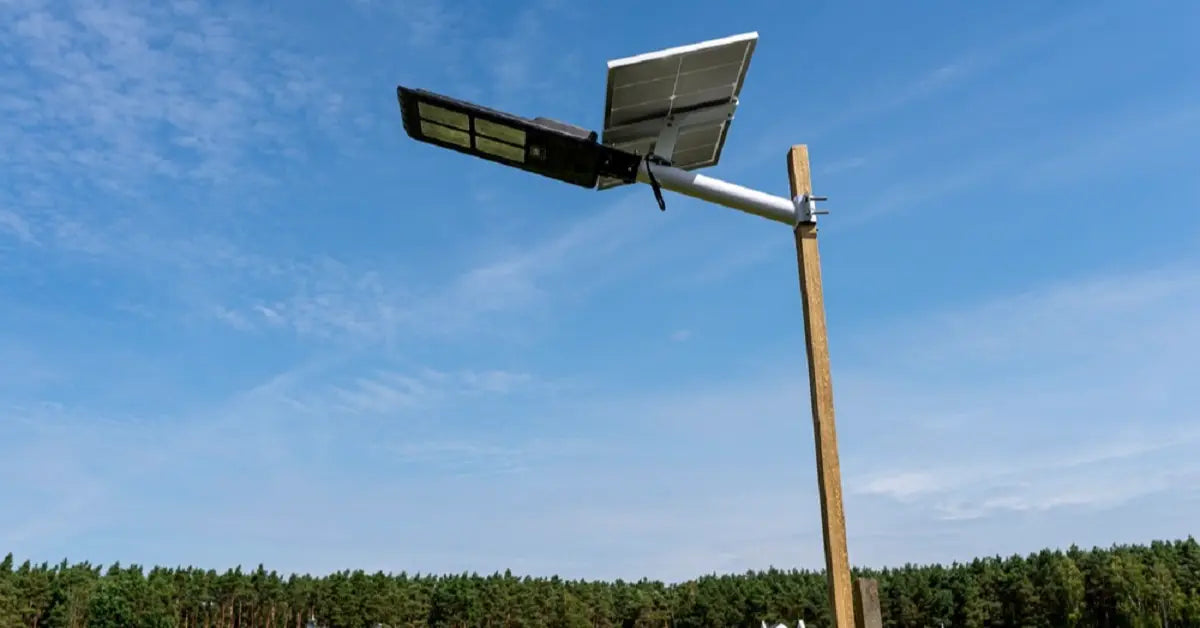
The solution is a detachable panel design. You mount the light body wherever you need illumination. You run the cable to place the panel in full sun — on a south-facing roof edge, a fence section clear of the canopy, or a stake in an open part of the yard.
The intelamp Pro Solar Flood Light with 16.4ft Cable is built specifically for this situation. The 16.4-foot waterproof cable separates the 24W monocrystalline panel from the 2,000-lumen head, so you can install the fixture in a shaded porch, barn, or chicken coop while the panel charges in direct sun. The 20,000mAh lithium battery fully charges in about 5 hours and delivers 15+ hours of runtime — which also makes it a solid answer for solar reliability through winter months.
A remote lets you switch between 3000K warm, 4000K natural, and 6000K cool white on the fly. The IP65 rating extends to the cable connectors, not just the housing. Browse intelamp's best-selling outdoor lights if you want to compare options across brightness levels.
Step 5: Color Temperature Isn't Just Aesthetic

Most people treat color temperature (measured in Kelvin) as a style preference. It's actually a functional decision.
3000K warm white mimics the glow of incandescent bulbs. It suppresses less melatonin, which means it's friendlier to your circadian rhythm in the evening. Use it for patios, garden seating, and front-door welcome zones where you want a relaxed feel.
6000K cool white is blue-toned and high-contrast. The human visual system perceives it as sharper and more alert — exactly what you want for security zones. At equivalent lumen counts, 6000K delivers better edge definition and face recognition than warm white. That perceived brightness advantage can actually let you run lower lumen output while maintaining effective security coverage, which saves battery.
4000K natural white is the versatile middle ground — good for walkways and multipurpose zones that serve both daily navigation and occasional security needs.
Quick Installation Checklist
Before you mount anything permanently, run through these:
- Is the panel actually in direct sun? Test for a full day before committing to a mounting position.
- Are you near a deciduous tree? The summer canopy blocks charging right when you expect good performance.
- Are your security lights mounted high enough? 8–12 feet prevents tampering and expands the coverage zone.
- Do you have replaceable batteries? Li-ion cells last roughly 1.5–3 years before capacity drops noticeably. Replaceable packs mean you extend the fixture life rather than replacing the whole unit.
FAQs
What should I look for when buying outdoor solar lights?
Start with your installation site, not the spec sheet. Confirm you have 6–8 hours of daily direct sun, then match lumen output to the task, require IP65 or higher waterproofing, and prioritize 8–10 hours of runtime. For shaded or north-facing spots, a detachable panel design is non-negotiable.
How many lumens should outdoor solar lights have?
Path and garden lights: 10–50 lm. Spotlights and accent fixtures: 50–200 lm. Security floodlights: 300–700+ lm. Overshooting lumens on a path light wastes battery and creates glare; undershooting on a security light leaves you with a dark zone.
Is 3000K or 4000K better for outdoor lighting?
3000K is better for social and relaxation zones — patios, garden seating, entryways. 4000K to 6000K is better for security zones and driveways where visual clarity and alertness matter more than atmosphere.
Why do solar lights fail so quickly?
Usually one of two things: battery degradation (NiMH cells often last only 2–3 years) or water ingress through inadequate IP ratings. Choosing IP65+ fixtures with lithium-ion batteries and sealed connections solves both failure modes.
intelamp holds a Guinness World Record for the largest display of solar-powered LEDs — a standard of engineering that carries through to every fixture in the lineup.