
You've seen it before. A solar light box claims "10,000 lumens," you bring it home, and your yard still looks like a cave by 9 PM. The number wasn't a lie — the engineering behind it just wasn't there.
Here's the truth: a good solar light doesn't need the highest lumens. It needs the right lumens for the job.
The Quick Answer (Bookmark This)
| Application | Lumens You Need |
|---|---|
| Walkways & Path Lights | 50 – 200 lumens |
| Driveways & Patios | 300 – 600 lumens |
| Security & Floodlights | 700 – 3,000+ lumens |
These ranges come from real photometric testing — not marketing copy. Now let's break down why each one works.
Pathway Lights: Less Is More (50–200 Lumens)

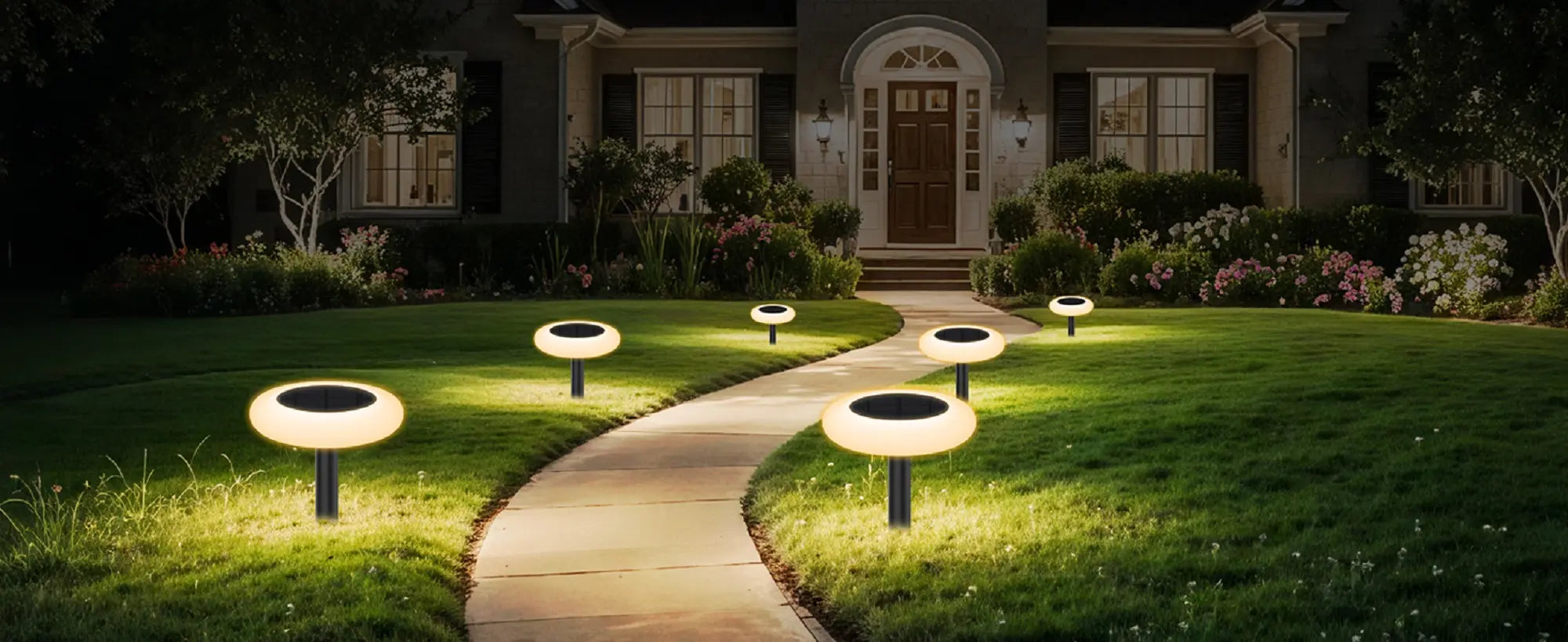
Path lighting isn't about flooding your yard with brightness. It's about safe navigation and visual warmth. At 50–100 lumens, a well-placed ground stake light guides your guests without blinding them.
Go too bright here and you actually create a problem — harsh pools of light with dark gaps in between, which is worse for night vision than a dimmer, consistent glow. Space fixtures every 6–8 feet and let them work together. This range also places minimal drain on the battery, so your lights stay on longer overnight without any issue.
Best for: garden borders, front door walkways, decorative accents.
Patio & Driveway Lights: The Functional Sweet Spot (300–600 Lumens)

This is the range most homeowners actually need. It's bright enough for outdoor dining, parking a car, or hosting a backyard gathering — without the harsh, clinical feel of a security light.
Here's what most guides skip: color temperature matters as much as lumen count at this level. A 400-lumen warm white (2,700K) light feels cozy and inviting. That same 400 lumens in cool white (6,000K) feels like a fluorescent tube. Same wattage, completely different vibe. We'll go deeper on that in a minute.
Best for: patios, entertaining areas, larger garden zones.
Security Floodlights: Serious Output for Serious Needs (700–3,000+ Lumens)

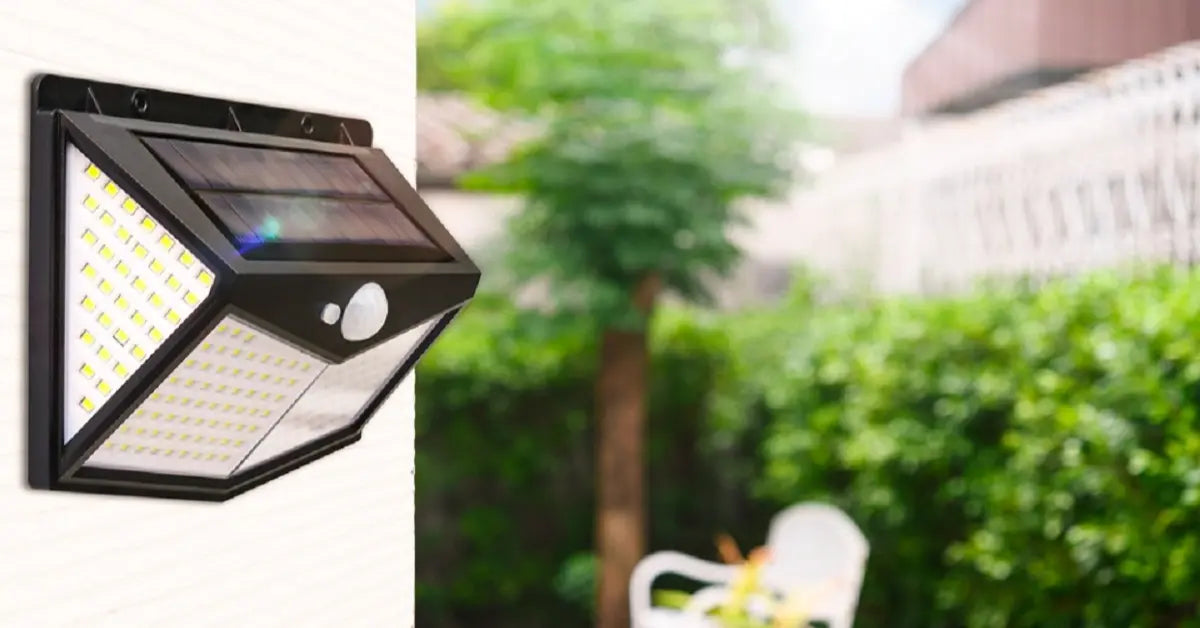
Security lighting needs to eliminate dark corners, deter intruders, and — if you have a camera — capture usable footage. That takes real lumen output. In our lumen testing labs at intelamp, 700–1,200 lumens handles most residential security needs comfortably: a side gate, a garage apron, a rear fence line.
Jump to 1,500–3,000 lumens and you're covering a full driveway or a wide commercial entrance. Those viral listings claiming "10,000 lumens" from a compact fixture with a fist-sized panel? Treat those with skepticism. Understanding what the highest realistic lumens look like in a properly engineered solar light saves you from expensive disappointment.
Best for: driveways, perimeter fencing, dark side yards, motion-activated deterrence.
The Battery Problem Nobody Talks About

Here's where most cheap "high-lumen" solar lights fail. Every lumen costs battery energy. A light running at 1,000 lumens continuously drains its battery roughly twice as fast as one running at 500 lumens.
Budget fixtures hit their rated brightness for an hour, then quietly dim or shut off by midnight. They're not technically lying — they just don't have the battery capacity to sustain that output. The fix is two things working together: a large-capacity battery and smart power management.
Motion sensors are the biggest efficiency gain available. They keep the light in a low-draw eco mode (around 50 lumens) and only fire to full brightness when something moves. Intelligent dimming takes it further — as battery charge drops through the night, the controller gradually reduces output rather than cutting off entirely. Your light at 3 AM might run at 70% brightness, which is completely imperceptible but adds hours of runtime.
For battery chemistry, LiFePO4 (Lithium Iron Phosphate) outperforms standard Ni-MH and older lithium-ion cells significantly. It lasts 2,000+ charge cycles versus 300–500 for cheaper alternatives — a difference that determines whether you're replacing your lights every 18 months or every 8 years. It's also why replacing batteries in solar lights is sometimes worth it and sometimes isn't, depending entirely on what chemistry is inside.
Perceived Brightness: The Kelvin Factor

I mentioned color temperature earlier. Here's why it deserves its own section.
Two lights with identical lumen ratings can feel dramatically different in brightness based on their Kelvin (K) rating. Cool white (5,000K–6,500K) pushes more energy into the blue-white range that our eyes read as crisp, alert, and bright. Warm white (2,700K–3,000K) sits in the amber range — comfortable and inviting, but perceptually softer.
For security: cool white makes a 600-lumen light feel brighter than an 800-lumen warm white fixture. For a patio dinner: warm white at 300 lumens beats cool white at 500 for pure ambiance. Getting this right means you can sometimes use fewer lumens — which directly extends battery life.
This is exactly why we built the intelamp Solar Spot Lights with a three-color LED and a remote. Cool White (6,000K) for security nights, Neutral White (4,000K) for general use, Warm White (3,000K) for entertaining — switchable without touching the fixture. The 4,000mAh LiFePO4 battery keeps whichever setting you choose running all night, even after the light charges on a cloudy day at reduced panel efficiency. It mounts as a wall fixture or ground stake, with a 120° adjustable head and IP65 waterproofing for year-round use.
If your existing lights are underperforming before you replace them, it's also worth trying a few methods to make solar lights brighter first — sometimes repositioning the panel is all it takes.
intelamp holds a Guinness World Record for the largest display of solar-powered LEDs — and that same engineering discipline goes into every fixture we make. Browse our top-rated outdoor solar solutions to find the right fit for your space.
FAQs
Is 3,000 lumens bright enough for outdoors?
Yes — 3,000 lumens is exceptionally bright for a home. It's comparable to wired security systems and best suited for large driveways or wide perimeter coverage. For most standard residential security needs, 700–1,500 lumens is plenty, and uses less battery power.
How bright is a 3-lumen solar light?
Very dim. It's purely decorative — think of it as a subtle "firefly" glow for a flower bed. It won't help you navigate a path or see anything clearly.
How bright are 15-lumen solar lights?
15 lumens works for subtle step-edge lighting or low-intensity border accents. It creates a visual cue rather than functional illumination. Space them every 3–4 feet for a gentle guiding line along a path.
Is 50 lumens bright for a solar light?
50 lumens is the sweet spot for accent and path lighting. It's bright enough to highlight shrubs, add depth to architecture, and guide foot traffic safely when spaced correctly. It's also efficient enough to run all night without straining your battery — a genuinely useful output for most garden applications.