
I've helped a lot of people set up outdoor solar lighting — and the single biggest mistake I see is buying on looks alone. A sleek fixture with a mediocre battery and a polycrystalline panel will disappoint you by November. Knowing what to actually evaluate before you buy saves money and a lot of frustration.
Here's exactly what I look for.
The Bottom Line
| Feature | What to Look For | Why It Matters |
|---|---|---|
| Brightness | 5–50 lm (paths) / 300–1,000+ lm (security) | Match output to task |
| Weatherproofing | IP65 minimum | Survives rain, dust, freeze cycles |
| Battery Chemistry | LiFePO4 (Lithium Iron Phosphate) | Stable in cold; longer lifespan |
| Solar Panel | Monocrystalline silicon | 17–22% efficiency vs. 13–16% poly |
| Color Temperature | 2700K–3000K residential / 5000K–6000K security | Comfort vs. visibility |
| Runtime / Modes | 8–12 hrs with motion or dim-to-bright modes | Conserves charge overnight |
1. Lumens: Match the Brightness to the Job

The first question I ask is: what are you actually trying to light?
Lumens measure output, and matching that output to the task is critical. Too many lumens on a path light creates glare and kills the battery. Too few on a security floodlight leaves your driveway in the dark.
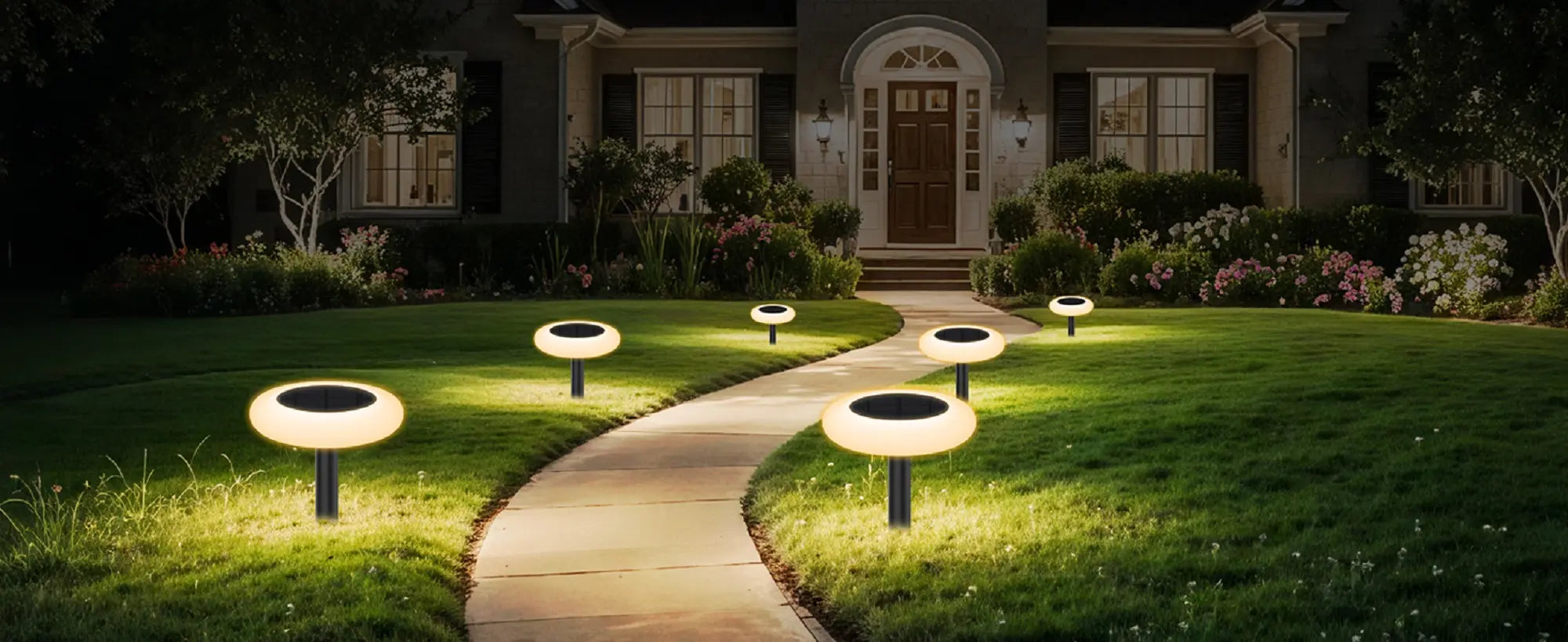
- Path and garden lights: 5–50 lm for soft, ambient guidance.
- Accent and landscape lights: 50–200 lm to highlight features without washing them out.
- Security floodlights: 300–1,000+ lm for driveways and entry points.
This guide on lumen ranges by application covers the nuances well. Getting the count right also protects your battery — lower output draws less power and extends overnight runtime.
2. IP Rating: Don't Skip the Weatherproofing

IP65 is the minimum I'd accept for any open outdoor installation. It means fully dustproof and protected against water jets from any direction. Anything lower is only appropriate under a covered patio.
Near irrigation systems or in coastal environments, go IP66 or IP67. Inadequate weatherproofing is one of the main reasons solar lights fail early — and it's almost always avoidable. Look for UV-stabilized ABS plastic, cast aluminum, or stainless steel hardware. Cheap materials fade and corrode within a single season.
3. Battery Chemistry: Why LiFePO4 Matters

Most budget solar lights ship with NiMH batteries. They're fine in mild climates — but in real winters, they fall short.
NiMH cells can lose 30–40% of their capacity below freezing. That 10-hour runtime you tested in September becomes 5–6 hours by January. LiFePO4 (Lithium Iron Phosphate) batteries handle cold discharge significantly better. They hold more stable output at low temperatures, support more charge cycles, and don't degrade as quickly in heat either.
I also look for 8–12 hours of runtime with motion-activated or dim-to-bright modes. Those modes aren't just convenient — they're how a light stretches one charge across a full winter night.
4. Solar Panel Type: Monocrystalline vs. Polycrystalline

The panel determines how fast your battery recovers each day. Monocrystalline panels convert 17–22% of sunlight to electricity. Polycrystalline runs 13–16%. On a compact fixture where panel size is limited, that gap matters — especially on overcast days.
Understanding how solar lights work as a system helps here. A weak panel creates a bottleneck the battery can never fully recover from.
For path lights in open sun, integrated panels are fine. For security fixtures under eaves or on north-facing walls, I prefer a detached panel on a separate cable — mount the light where you need it, place the panel where the sun actually reaches.
5. Sensors and Coverage: Solving the Blind Spot Problem

Here's a question I hear a lot: "How do I cover a large backyard without gaps?"
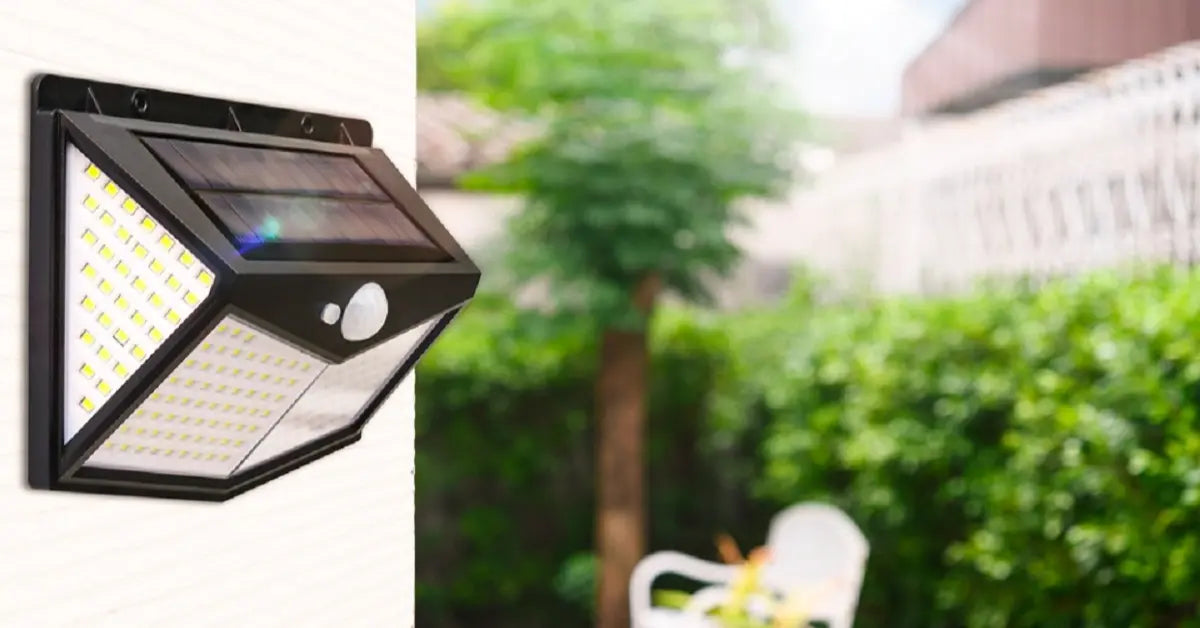
Most single-sensor lights use one PIR sensor with a 90–120° detection field. Position it slightly wrong and you've created a blind spot. Dual-sensor designs extend detection to 180°, catching movement from multiple angles at once. Pair that with wide-angle LED panels covering a 240° arc and you get real perimeter coverage — not just a single bright cone.
For large properties, isolated lights are the other problem. One fixture triggers while the far side of the yard stays dark. A linkable system solves this — when one unit detects motion, every linked fixture in range activates simultaneously.
The intelamp Solar Security Floodlight is built around exactly this. Its mesh system links multiple units within 25 meters, dual infrared sensors cover 180° of detection, and the double-sided panels deliver 240° of illumination. The 1,200 lm motion output runs on a LiFePO4 battery with a monocrystalline panel — so winter performance stays consistent. A handheld remote adjusts motion delay, timer modes (2/6/12 hours), and brightness, with all settings saving automatically.
Browse intelamp's best-selling outdoor lights if you want to compare options across output levels.
6. Winter and Cloudy Day Reality

I'll be straight: solar lights don't perform in January the way they do in August. Shorter days mean fewer charging hours. Cloud cover reduces panel output. Budget battery chemistry makes it worse.
The fix is straightforward — LiFePO4 chemistry, monocrystalline panels, and motion-activated modes working together close most of that gap. For a practical look at what to expect season to season, winter solar light performance is worth a read before you buy.
FAQs
How many lumens should outdoor solar lights have?
| Application | Recommended Lumens |
|---|---|
| Path / garden | 5–50 lm |
| Accent / landscape | 50–200 lm |
| Security / floodlight | 300–1,000+ lm |
Match output to the task. Overshooting on path lights creates glare; undershooting on security lights defeats the purpose.
Is 3000K or 4000K better for outdoor lighting?
3000K warm white suits patios, gardens, and entryways — relaxed atmosphere, less circadian disruption. 4000K–6000K cool white is better for driveways and security zones where contrast and visibility matter more than ambiance.
What is the best brand of outdoor solar lights?
Look for brands that publish real specs: LiFePO4 batteries, IP65+ ratings, monocrystalline panels, and honest lumen figures. intelamp holds a Guinness World Record for the largest display of solar-powered LEDs — an engineering benchmark that carries through to their product line.
What is the best wattage for outdoor solar lights?
Lumens are more useful than wattage for comparing brightness. That said, cross-referencing panel wattage against battery capacity matters: a small panel paired with a large battery won't fully recharge in a single day. Look for balanced specs, not just the highest number on either side.
Buy for your yard's actual conditions — sun exposure, climate, and the specific job each fixture needs to do. The specs on paper only matter if they match the reality outside.