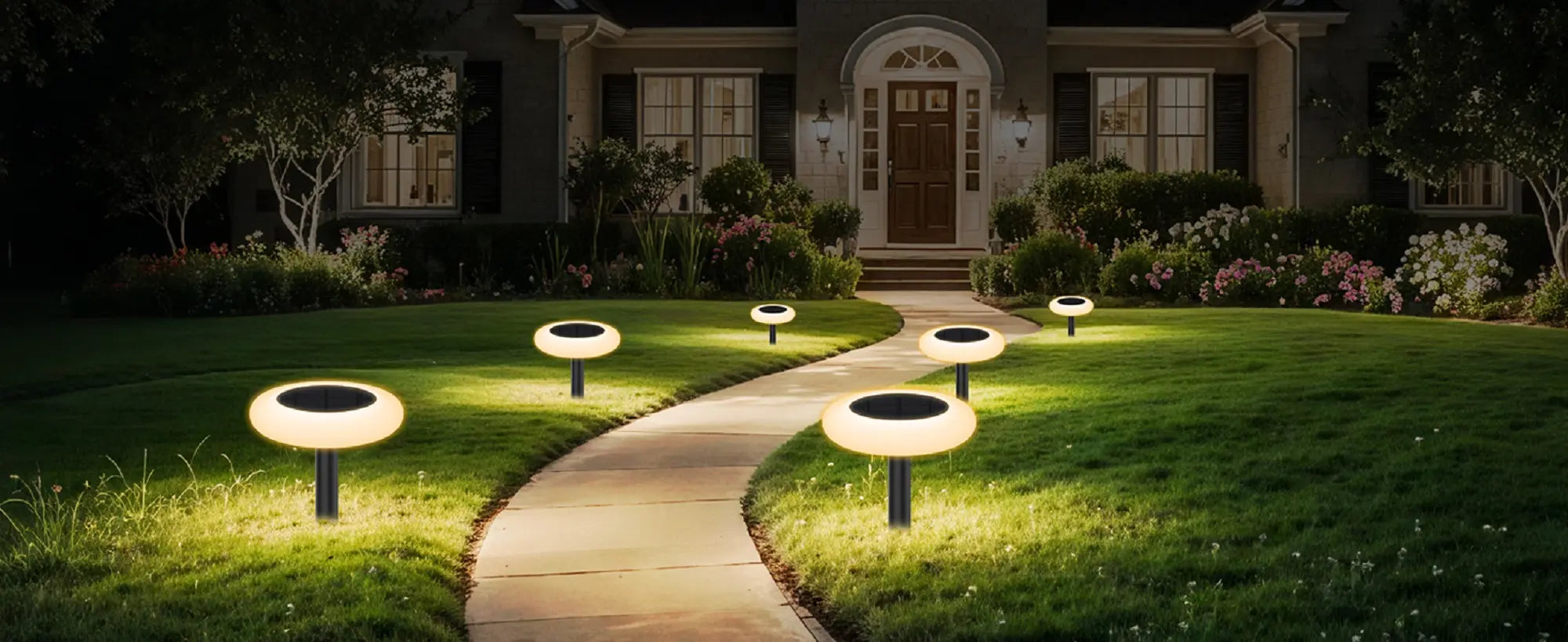

Choosing outdoor lighting isn't just about aesthetics. It's a long-term investment in safety, property value, and operating costs. The solar vs. electric debate has shifted dramatically—and wired no longer automatically means better.
Key Differences at a Glance

Installation: 20 Minutes vs. 2 Weeks
Solar lights mount in under 20 minutes. No wiring. No permits. No contractors.
Wired systems require a transformer, underground cable runs, and often trenching at $20–$40 per linear foot. A 100-foot driveway run can cost $2,000–$4,000 in labor alone—before you buy a single fixture.
Permits add another layer. Many municipalities require licensed electricians and scheduled inspections for any new electrical circuit. Avoid these common lighting mistakes by planning your power source before breaking ground.
Brightness: The Gap Has Closed
Electric lights win on raw consistency—grid power never fluctuates.
But modern solar has caught up fast. Today's top units deliver 1,200–3,000+ lumens, output levels that were exclusive to hardwired fixtures just three years ago. Understanding maximum solar lumen output reveals how dramatically the technology has advanced.
The key driver? Battery capacity. A 6000mAh lithium-ion cell stores 5–7x more energy than early-generation solar units—enough to run motion-activated lighting for up to 3 consecutive nights without sun.
True Cost: Don't Compare Sticker Prices
| Cost Factor | Solar | Electric (Wired) |
|---|---|---|
| Fixture | $40–$200 | $25–$150 |
| Installation | $0–$50 | $500–$4,000+ |
| Monthly energy | $0 | $15–$60/fixture |
| Permit fees | None | $50–$500 |
| Battery replacement | $10–$30 (every 3–7 yrs) | N/A |
Over 10 years, solar almost always wins on total cost—especially when you know how long solar lights last with proper maintenance.
The Modern Pivot: Solar Is No Longer "Accent-Only"

For most of the 2010s, solar meant dim pathway markers. That reputation is now outdated.
In our testing at intelamp, the biggest performance leap has come from battery density, not just panel efficiency. A 6000mAh cell eliminates the "what happens on cloudy days?" objection for most North American climates.
It's also worth noting: intelamp holds a Guinness World Record for the largest display of solar-powered LEDs—a reflection of the engineering precision required to deliver consistent output at scale.
Modern dual-sensor designs (radar + PIR) add another layer of reliability. They detect motion from 180° front and side coverage, operating in low-power mode until a presence triggers full security brightness—exactly how wired security lighting has behaved for decades.
Full Comparison Table
| Feature | Solar | Electric (Wired) |
|---|---|---|
| Installation | DIY, no wiring | Professional + trenching |
| Brightness | 200–3,000+ lumens | High & consistent |
| Reliability | Weather-dependent | Grid-dependent |
| Monthly Cost | $0 | $15–$60/fixture |
| Maintenance | Panel clean + battery swap | Minimal |
| Lifespan | 3–7 yrs (battery); 20+ (panel) | 10–25 yrs (fixture) |
| Permit Required | No | Often yes |
| Best For | Remote areas, DIY, eco use | Shaded zones, commercial |
The intelamp 270° Solar Flood Light

The intelamp 6000mAh Solar Flood Light was built to eliminate every technical argument for choosing wired over solar.
What makes it different:
- 6000mAh battery — Up to 3 nights of operation on motion mode
- 1,200 lumens / 270° arc — Three adjustable heads cover an entire garage or driveway
- Dual sensors — Radar + PIR, 180° detection, no blind spots
- IP65 waterproof — Built for rain, snow, and sustained humidity
- Zero installation cost — Screws and tie straps included
Browse our full range of high-lumen solar outdoor lights to find the right fit for your property.
When to Choose Which?
Choose solar if:
- You want zero operating costs
- The location is remote or away from existing power
- You get 4+ peak sun hours daily (most of the US qualifies)
- Trenching would damage landscaping or irrigation
Choose electric if:
- Your property has heavy, year-round shade
- You need uninterrupted 3,000+ lumen output 24/7
- You're already running electrical work and can bundle costs
Knowing how much sunlight your fixture needs is the single most important factor before choosing a location.
FAQs
Are solar lights better than electric lights?
It depends on your conditions. Solar wins on cost, installation, and sustainability. Electric holds an edge in chronically shaded environments. For most residential applications with adequate sun, a quality solar flood light now performs comparably to wired—at a fraction of the total cost.
What is the healthiest light for your eyes?
Look for a CRI of 80+ and a color temperature of 2700K–4000K. This minimizes blue light and glare. Both solar and wired LED fixtures can meet this standard—it comes down to LED quality, not power source.
What is the downside of solar lights?
Two main ones: weather dependency and battery replacement every 3–7 years. Poor panel placement (north-facing walls, heavy shade) can also cut charging efficiency by 40–60%. Read our guide on whether solar lights are worth it for your specific setup.
Can solar lights be left out all winter?
Yes. IP65+ rated fixtures with polycarbonate lenses handle snow, ice, and freezing temps without damage. Expect shorter runtimes in winter due to reduced daylight hours. Our winter solar guide covers panel angle adjustments and cold-weather battery behavior in detail.