

I've tested dozens of solar lights over the years. Some barely lasted a season. Others are still going strong after three winters.
The difference? It's not just about price—it's about understanding what you're actually buying.
Many homeowners are skeptical about solar lighting, and honestly, I get it. If you've ever bought those $20 pathway lights from a big-box store, you watched them die in six months.
But here's the thing: recent advancements in battery chemistry and LED technology have changed the game. Solar lights are no longer limited to being decorative accessories.
This guide separates the disposable toys from the durable, high-performance investments.
The Honest Verdict: Are Solar Lights Worth It?
Here's the straight answer:
Solar lights are worth it for budget-friendly, low-level accent lighting. They offer flexibility and save money on electricity bills.
However, they may not be worth it if you need high-brightness, reliable security lighting, or consistent year-round performance—unless you choose high-performance models designed specifically to overcome traditional solar light weaknesses.
Think of it like buying shoes. A $15 pair might work fine for walking around the house. But if you're running marathons, you need something engineered for performance.
The Case FOR Solar: Why Millions Are Switching

When chosen correctly, solar lighting offers compelling advantages that traditional wired lights simply can't match.
Easy Installation (Zero Electrician Fees)
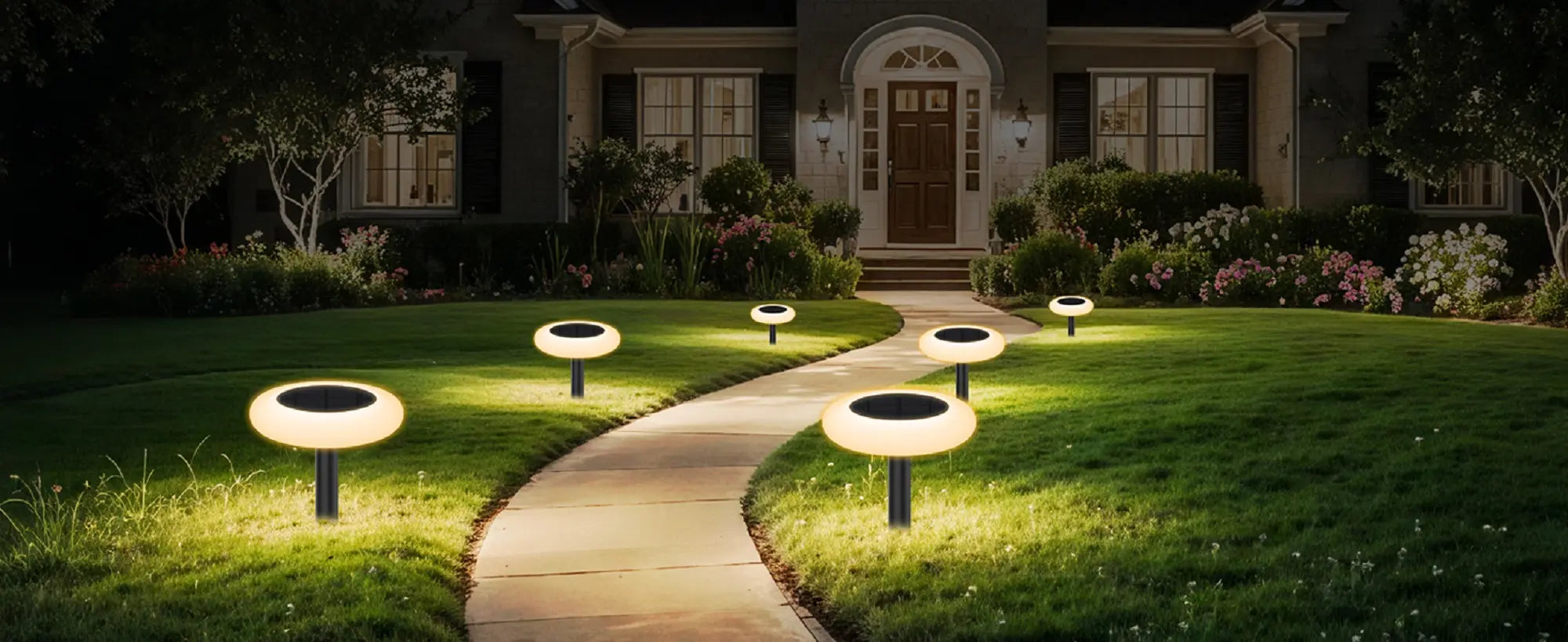
Solar lights are typically DIY-friendly. You stick them in the ground or mount them to a wall. No trenching. No conduit. No permit applications.
Here's where the math gets interesting: hiring an electrician to install outdoor wired lighting typically costs $200-$500 per fixture when you factor in labor, materials, and running new circuits. Solar lights? $0 installation cost.
That's a massive difference when you're lighting up a pathway, driveway, or backyard.
Cost-Savings Over Time
Since solar lights rely on free solar energy, they eliminate ongoing electricity bills entirely. A typical 15-watt outdoor LED light running 8 hours per night costs about $5-7 annually in electricity.
That might not sound like much for one light. But multiply that by 10 pathway lights over 10 years, and you're looking at $500-700 in savings—plus the installation savings mentioned above.
Eco-Friendly Lighting
Utilizing renewable solar power means reduced carbon emissions. No fossil fuels burned at power plants to light your walkway. When paired with long-lasting LED bulbs, the environmental impact drops even further.
Aesthetics and Flexibility
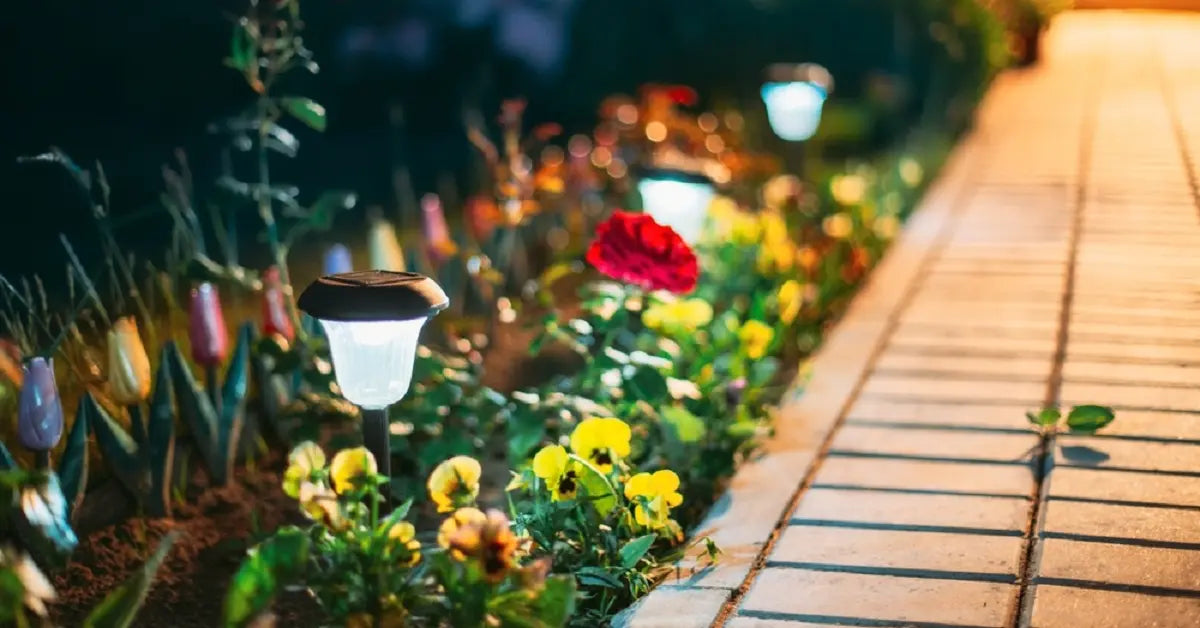
Solar lights excel at decorative and accent lighting. Want to add ambiance to your garden? Highlight a water feature? Create a cozy patio vibe? Solar lights let you experiment with placement without committing to permanent installation.
Move them around until you find the perfect spot. No electrician callback needed.
The Case AGAINST Solar: Why You Might Be Disappointed (The Cheap Model Trap)

Here's where most people get burned. They buy cheap solar lights expecting functional performance, then wonder why solar lighting "doesn't work."
The problem isn't solar technology. It's buying the wrong grade of product.
The "Dim Light" Problem
Most entry-level solar lights provide very subtle illumination—sometimes lighting only a one-foot radius. They're essentially glow sticks stuck in the ground. Fine for marking a path, terrible for actually seeing where you're going.
For functional lighting, you need around 300 lumens minimum. Security lighting? Think 800-1200 lumens. Most cheap solar lights produce 5-50 lumens.
That's the difference between "I can see my steps" and "I think there's a light on somewhere."
Pro tip: Look beyond the sticker price and evaluate using the "Lumen-Per-Dollar" metric. A $15 light producing 10 lumens is a worse deal than a $60 light producing 800 lumens.
Weather Dependency & Inconsistent Performance
Solar lights rely on consistent sunlight to charge their batteries. Cloudy days, rain, or short winter days reduce charging dramatically. Your lights might shine bright for 3 hours instead of all night.
This is where understanding the internal components becomes critical. The solar panel size, battery capacity, and charge controller quality determine whether your light survives a few cloudy days or gives up entirely.
Poor Durability and Short Lifespan
Many inexpensive solar lights use flimsy plastic housing that cracks in the first freeze. Cheap components degrade quickly when exposed to frost, rain, UV rays, and salt air.
The average lifespan for budget solar yard lights is often cited as 1 to 3 years. Contrast that with wired LED systems that can last 10-15 years or more.
Here's where the IP rating matters. IP stands for "Ingress Protection"—it tells you how well sealed the light is against dust and water. An IP65 rating means fully dust-tight and protected against water jets from any direction. Anything below IP44 is basically asking for moisture damage and corrosion.
If the packaging doesn't list an IP rating? Walk away.
Battery Chemistry Evolution
The rechargeable batteries in solar lights have a limited lifespan and degrade over time. Older or cheaper lights often use Nickel Cadmium (NiCd) batteries, which develop memory issues and fail quickly.
Modern, reliable lights use superior lithium-ion or LiFePO₄ batteries, offering much longer life cycles and better performance in cold weather. The battery is the heart of the solar light—cheap out here, and everything else is pointless.
The Exception to the Rule: High-Performance Solar Security Lights

High-performance solar lights are engineered to solve every historical drawback I just mentioned. They're not perfect for every situation, but they turn solar from "decorative only" into "actually functional."
Breaking the "Low Brightness" Myth
High-end security models shatter the dim light stereotype. Intelamp's high-capacity solar flood light achieves 1200 lumens—bright enough to deter prowlers and illuminate driveways, garages, or dark corners effectively.
That's the same output as many wired security lights. The difference is you're not paying an electrician or running new wiring.
Solving "Inconsistent Performance" with Massive Battery Capacity
Here's where battery technology makes or breaks the experience. Cheap solar lights typically have 1200mAh batteries—barely enough for one night of moderate use.
Professional-grade models like Intelamp's solar flood light feature a 6000mAh battery—five times the capacity. This means the light can run for up to 3 nights on a single full charge. A few cloudy days? No problem.
The light also features Dual Sensors with 270° motion detection coverage, making it highly effective for security monitoring. It's not just bright—it's smart about when to turn on.
Real-World Comparison: What You're Actually Getting
| Feature | Cheap Solar Lights | High-Performance Solar | Wired Lights |
|---|---|---|---|
| Brightness | 5-50 lumens | 800-1200 lumens | 800-1500 lumens |
| Battery Capacity | 600-1200mAh | 5000-6000mAh | N/A (hardwired) |
| Installation Cost | $0 | $0 | $200-500 per light |
| Electricity Cost | $0/year | $0/year | $5-7/year per light |
| Weather Resistance | IP44 or less | IP65+ | IP65+ |
| Typical Lifespan | 1-3 years | 5-7 years | 10-15 years |
| Warranty | 90 days - 1 year | 2+ years | 1-3 years |
The middle column is where the value lives. You get near-wired performance without the installation hassle or ongoing costs.
Explore Professional-Grade Solar Solutions
If you require reliable, durable, and bright illumination without the hassle and cost of wired installation, investing in professional-grade solar lighting is worthwhile.
Browse worth-it solar lighting options and compare models designed for long-term reliability and superior performance. Look for specs like battery capacity, lumen output, IP rating, and warranty length—these separate the toys from the tools.
FAQs
What are the disadvantages of solar outdoor lights?
The main disadvantages include limited brightness in cheap models, reliance on sunlight (inconsistent performance on cloudy days), shorter lifespan than wired lights, and poor durability in harsh weather.
High-performance models address these issues through larger batteries, efficient panels, and weather-resistant construction.
Why do solar lights fail so quickly?
Solar lights fail due to undersized batteries, inefficient solar panels, and cheap materials that break down in frost, rain, or salt air.
The internal component quality matters more than appearance. Cheap circuitry and charge controllers are the real culprits.
Is it worth buying solar lights?
Yes, for low-cost accent lighting or if you invest in high-capacity models for security and path lighting.
Not worth it if you buy cheap models expecting reliability and high brightness. A $100 solar light with $0 installation often beats a $30 wired light that costs $300 to install.
Is it okay to leave solar lights out in the winter?
Low-cost lights struggle in winter due to shorter days and snow coverage.
High-quality models with tilted panels, motion sensors, and lithium-ion batteries (better cold performance) operate reliably year-round. Avoid older NiCd battery chemistry.
The Bottom Line
Solar lights are absolutely worth it—when you buy the right ones for your needs. Skip the bargain-bin decorative lights if you need actual illumination.
Invest in professional-grade models with real battery capacity, proper IP ratings, and manufacturer warranties. Your future self (and your wallet) will thank you.
Further resources
How Long Do Solar Lights Last? Engineer's Guide to Durability (2025)
What is a Solar Light? The Ultimate Beginner's Guide to Solar Lighting

1 comment
ayzalcorporation
Very professional website! The variety of electronic toys and lifestyle products is impressive. Great job on presentation.
Very professional website! The variety of electronic toys and lifestyle products is impressive. Great job on presentation.