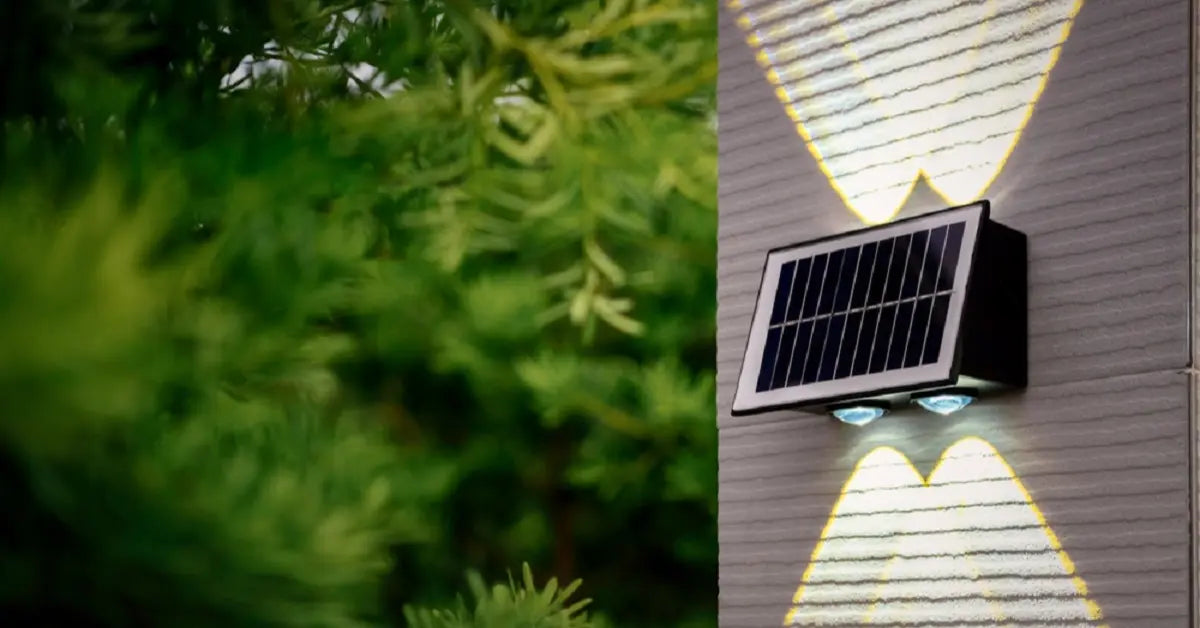
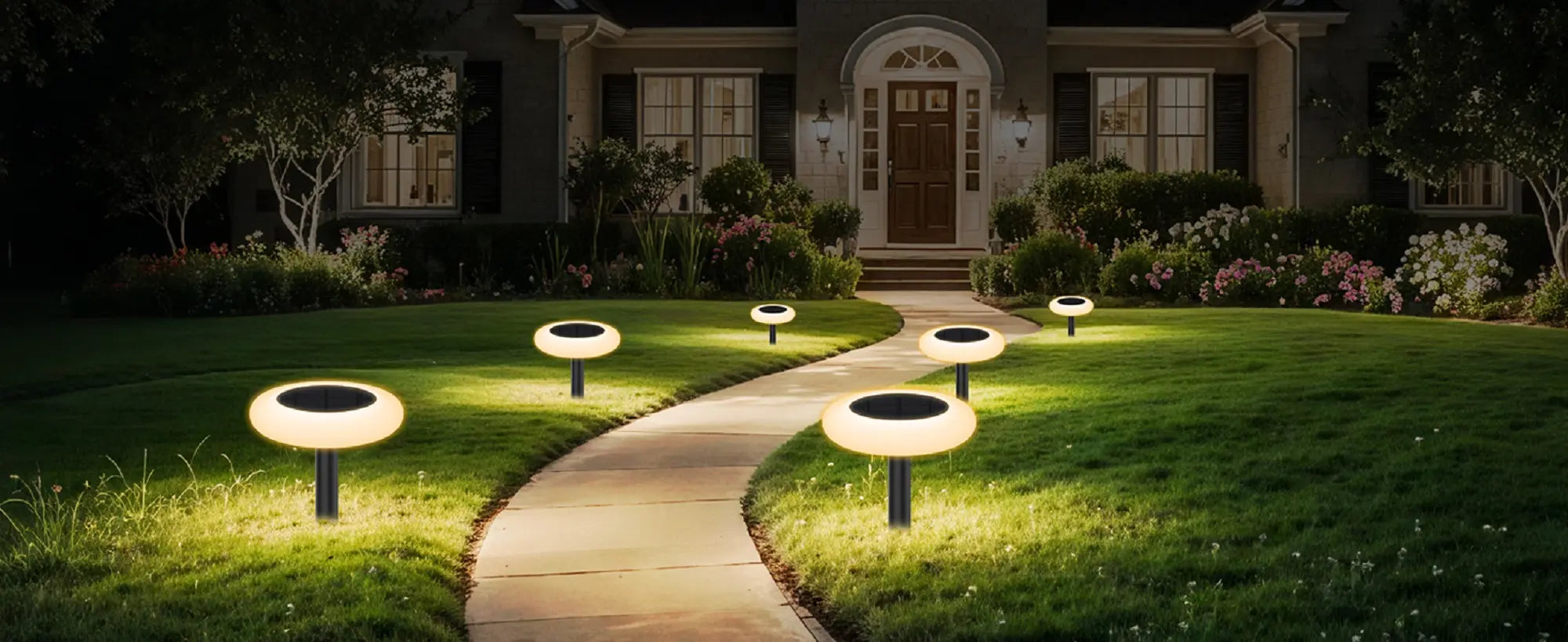
Short answer: yes, you can run a solar panel without a battery. Whether that's actually a good idea depends entirely on what you're trying to power. Understanding that distinction will save you from a frustrating—and potentially expensive—mistake.
This guide covers every viable method for battery-free solar operation, the real technical risks involved, and exactly when an integrated battery solution is the smarter choice.
Can You Actually Use a Solar Panel Without a Battery?

Yes—but with important caveats. Solar panels produce direct current (DC) electricity the moment photons hit the photovoltaic cells, and that electricity can flow straight to a connected load without any storage in between. The challenge isn't generating power; it's delivering it stably and consistently to devices that expect predictable voltage and current.
Solar output is inherently variable. A single cloud passing overhead can drop panel output by 40–60% in seconds. For devices that tolerate fluctuation—a water pump, a fan, a simple heating element—direct connection works fine. For anything with sensitive electronics, the math changes dramatically.
The two primary frameworks for going battery-free are grid-tied systems, where the utility grid acts as your buffer, and direct DC load connections, where a regulator handles the stabilization job a battery would otherwise do. Both have legitimate use cases. Neither is a good fit for reliable residential lighting.
4 Methods for Using Solar Power Without a Battery

1. Grid-Tied Systems: The Most Practical Battery-Free Option
In a grid-tied setup, your solar array connects through an inverter directly to your home's electrical panel—and to the utility grid beyond it. When your panels produce more than you're consuming, the surplus flows onto the grid; when production drops, you draw power back.
The grid effectively acts as an infinite battery, absorbing your excess and returning it on demand. Net metering programs in most US states provide bill credits for the energy you export, making this the most financially viable battery-free approach for most homeowners.
The significant limitation: grid-tied systems shut down automatically during power outages. This mandatory anti-islanding protection prevents back-feeding live power onto lines where utility workers may be operating. Without a battery backup, grid failure means your solar panels sit idle even in full sun.
2. Direct DC Load Connection
This is the simplest battery-free configuration: solar panel output wired directly to a DC device, with a charge controller or voltage regulator in between to manage variability. It works reliably for loads tolerant of fluctuating power—water pumps, ventilation fans, drip irrigation timers, and basic agricultural equipment.
These devices either slow down gracefully when voltage drops or simply pause when the sun disappears—neither outcome damages the hardware. Critical point: "directly" does not mean without regulation. Wiring a panel straight to any device without a controller in the circuit is asking for trouble, and we'll explain exactly why in the next section.
3. Hybrid Inverters Without a Battery Bank
Some modern hybrid inverters are engineered to operate in "zero-export" or "AC-coupled" mode without an attached battery. They use real-time solar production to power your home's AC loads while drawing from the grid to cover any shortfall—essentially a grid-tied system with the option to add storage later.
This is a useful transitional setup if you're planning a phased installation. The downside: you're still grid-dependent, and inverter behavior during cloud transients can be unpredictable without the buffering a battery provides.
4. DC-to-DC Converters (Buck and Boost Regulators)
When you need to power a specific DC device from a solar panel at a different voltage, a buck converter (steps voltage down) or boost converter (steps voltage up) is your tool. A panel outputting 18V open-circuit can be stepped down to 12V for a standard DC appliance, or 5V for USB-powered devices.
Quality buck converters maintain output stability across a reasonable input range—typically ±30% of the target input voltage. This is why panel sizing matters: you need to account for the amount of sunlight your location actually receives rather than ideal test conditions.
Why Voltage Regulation Is Non-Negotiable
This is where most DIY battery-free projects go wrong. The physics are straightforward, but the consequences of ignoring them are not.
What Unregulated Solar Output Actually Looks Like
An unloaded solar panel in full sun might output 21V open-circuit. The same panel under partial cloud cover might drop to 11V—and adding a load drops it further as current is drawn. All of this can happen within seconds as a single cloud passes.
For a DC motor, this means the motor speeds up and slows down—annoying but not fatal. For electronics with microcontrollers, LED drivers, or capacitor arrays, rapid voltage transients are a different story entirely.
The Specific Risk to LED Circuits
Modern LED chips operate within a narrow forward voltage range—typically 3.0V to 3.6V per diode—and the LED drivers that regulate this are similarly sensitive. In our engineering testing at intelamp, unregulated direct-drive configurations subject LED driver circuits to micro-spikes during rapid solar transients that can exceed the driver's rated input tolerance by 15–25%.
The damage isn't always immediate. Driver components sustain cumulative stress across hundreds of transient events before failing catastrophically. The result is a light that dies after three months rather than three years, with no obvious explanation for why—which is one of the primary reasons solar lights fail prematurely.
The 20% Rule and Sizing Implications
Battery-free direct-drive systems need to be significantly oversized relative to their load to handle startup surge currents and maintain stable operation during suboptimal conditions. As a practical guideline, the 20% rule for solar panel sizing recommends keeping your load at no more than 80% of rated output. In a battery-less system, that buffer often needs to be wider still to account for weather variability.
The Hidden Costs of DIY Battery-Free Systems
The appeal of going battery-free is usually cost reduction. In practice, the economics are more complicated than they appear upfront.
To build a properly engineered direct-drive system, you'll need:
- A quality MPPT charge controller — $40–$120, depending on amperage rating
- A buck or boost converter rated for your specific load — $15–$60
- Weatherproof enclosures for all electronics — $20–$80
- Properly rated wiring and connectors for outdoor DC circuits — $15–$40
- An oversized panel to handle worst-case conditions — adds 20–40% to panel cost
The component costs add up to $90–$300 before you've purchased the panel or the device being powered. Each connection point in an outdoor environment is also a future maintenance problem—corrosion, UV degradation, and water ingress accumulate over years. For context on whether a solar investment makes financial sense for your situation, our breakdown of whether solar lights are worth it runs through the honest payback math.
Where Battery-Free Solar Actually Makes Sense

To be direct: battery-free solar is an industrial and agricultural tool, not a residential one.
Good use cases:
- Daytime water pumping — irrigation systems, livestock troughs, pond aeration. The pump runs when the sun shines; the reservoir stores the water.
- Workshop ventilation — a solar-powered fan that runs during working hours and stops when you leave. The interruption pattern matches the use pattern.
- Grid-tied home generation — the most common and financially sound battery-free application, where the grid handles all buffering.
- Remote monitoring equipment — low-power sensors with sufficient local capacitance to ride through brief solar transients.
Poor use cases:
- Outdoor security lighting — by definition needed at night, when a battery-free system has zero output
- Motion sensor lighting — requires reliable on-demand power, not sun-dependent power
- Any application requiring continuous overnight operation
If you want to understand how solar lights work as a complete system—panel, controller, battery, and LED driver working together—it's a useful foundation before deciding whether to build or buy.
For Residential Lighting: Why an Integrated System Wins Every Time

Here's the honest engineering assessment: building a battery-free direct-drive system for outdoor residential lighting doesn't make sense on any metric—cost, reliability, or practicality. The application requires nighttime operation. Battery-free systems produce zero output at night. The problem is definitional.
What researching battery-free systems does clarify is exactly what makes a well-engineered integrated solar light worth its price: the quality of the battery chemistry, the efficiency of the panel, and the sophistication of the control electronics.
The intelamp Solar Motion Sensor Flood Light is a direct product of that engineering understanding. Here's what addresses each failure point covered in this guide:
- 25% high-efficiency monocrystalline panel — converts light more efficiently per square centimeter than polycrystalline alternatives, which matters on cloudy days when diffuse light is all you have. The panel charges the integrated battery reliably even in suboptimal conditions.
- Integrated battery + intelligent controller — eliminates every instability problem described above. The controller handles MPPT charging, battery protection, and LED driver regulation internally. You get stable, full-brightness output regardless of what the sun is doing at any given moment.
- Dual color output: 3000K / 6500K at 1200 lumens — warm white (3000K) for porches and entryways where ambiance matters; daylight (6500K) for driveways and perimeters where maximum visibility is the priority. Switchable via remote without touching the fixture.
- 180° radar motion sensor, 26-foot detection range — radar-based sensing is more reliable through light rain and doesn't trigger on thermal gradients the way basic PIR sensors can. At 26 feet, you get detection before someone reaches your door.
- IP65 weatherproof + smart remote control — the remote is particularly useful for high-mounting positions where you'd otherwise need a ladder to adjust settings after installation.
This is what the battery-less vs. integrated comparison actually comes down to: one requires ongoing technical management and stops working when you need it most; the other handles all of that internally and simply works. Browse our full range of solar security lighting if you're evaluating options across different mounting configurations.
FAQs
Can a solar panel be used without a battery?
Yes. Grid-tied systems and direct DC loads with regulators are both viable configurations. The limitation is that output only exists when the sun is shining—there is no stored energy for nighttime or overcast operation.
How do you use a solar panel directly?
Connect the panel output to your device through a charge controller or DC-to-DC buck converter that stabilizes the voltage. Never connect a solar panel directly to sensitive electronics without regulation—the voltage fluctuations will damage the device over time.
Can you run a solar panel without power going anywhere?
Yes—an unconnected panel simply produces voltage with no current flow, which is harmless to the panel. This is called open-circuit voltage (Voc) and is a standard specification on every panel's datasheet.
Can I hook a solar panel directly to a battery without a charge controller?
Technically possible, but strongly discouraged. Without a charge controller, the panel will continue pushing current into a fully charged battery, causing overcharging that degrades capacity and—in the case of some lithium chemistries—creates a safety hazard. Always use a controller.
Do solar lights need batteries to function?
Residential solar lights do, because they're required to operate at night. Whether batteries are strictly necessary depends entirely on the application—daytime-only tools can operate without them, but lighting cannot.
Do solar panels need direct sunlight, or will any light work?
Solar panels generate power from any light, not just direct sunlight. Output in diffuse or overcast conditions is significantly lower—typically 10–25% of full-sun rated output—but high-efficiency monocrystalline panels handle low-light conditions better than standard polycrystalline cells. Our post on whether solar panels need direct sunlight covers this in detail.
What's the biggest practical problem with battery-free solar for homes?
Timing mismatch. Peak solar production is between 10am and 2pm; peak residential energy demand is between 6pm and 10pm. Without a battery to bridge that gap, a battery-free system is simply unavailable when you need it most—which is the fundamental reason integrated storage exists.
intelamp holds a Guinness World Record for the largest display of solar-powered LEDs—a milestone that reflects the engineering depth we bring to every product in our lineup, from utility-scale installations down to the fixtures on your fence post.