
You spent a Saturday afternoon installing solar stake lights along your driveway. By 9 PM, they were already dimming. By midnight, gone.
That experience isn't a solar problem. It's a cheap hardware problem. And it's given genuinely good technology a reputation it no longer deserves.
The Bottom Line: Solar lights offer zero operating costs, effortless DIY installation, and real eco credentials. Their traditional weaknesses—dim output, weather dependency, placement limits—are largely solved by modern engineering. The key is knowing which specs actually matter.
The Pros: Why Millions Are Cutting the Cord

Zero Operating Costs
Once installed, your electricity bill for these lights is exactly $0.
Over five years, a single hardwired floodlight zone can cost $75–$300 in electricity alone—before installation. Solar eliminates that entirely.
No Wiring, No Permits, No Contractors
Solar fixtures are fully self-contained. No trenching, no transformer wiring, no permit filing.
Installation takes minutes, not days—and the fixture goes anywhere with sky access.
Automatic Operation
A built-in dusk-to-dawn sensor charges by day and activates after dark automatically. Motion-activation modes extend runtime by dimming until a presence is detected.
Low Maintenance
Modern solar LEDs are rated for 50,000–100,000 hours. The only routine task is an occasional panel wipe to clear dust or pollen.
With basic upkeep, understanding how long solar lights last helps set realistic expectations—properly maintained units regularly exceed 7 years.
Eco-Friendly
100% renewable energy. Zero grid draw. No carbon emissions during operation, no soil disruption from buried conduit.
The Cons: What the Marketing Doesn't Tell You

These limitations are real. Understanding why they occur reveals exactly what specs to look for.
Weather Dependency
On heavy overcast days, panel output can drop 60–80%.
Budget lights pair a small panel (2–3W) with a tiny battery (600–1200mAh). No buffer. One bad charging day means a dead light by midnight.
High-capacity batteries—6000mAh and above—store enough reserve for multiple nights without recharging. That buffer is what makes solar viable in winter.
Lower Brightness in Budget Units
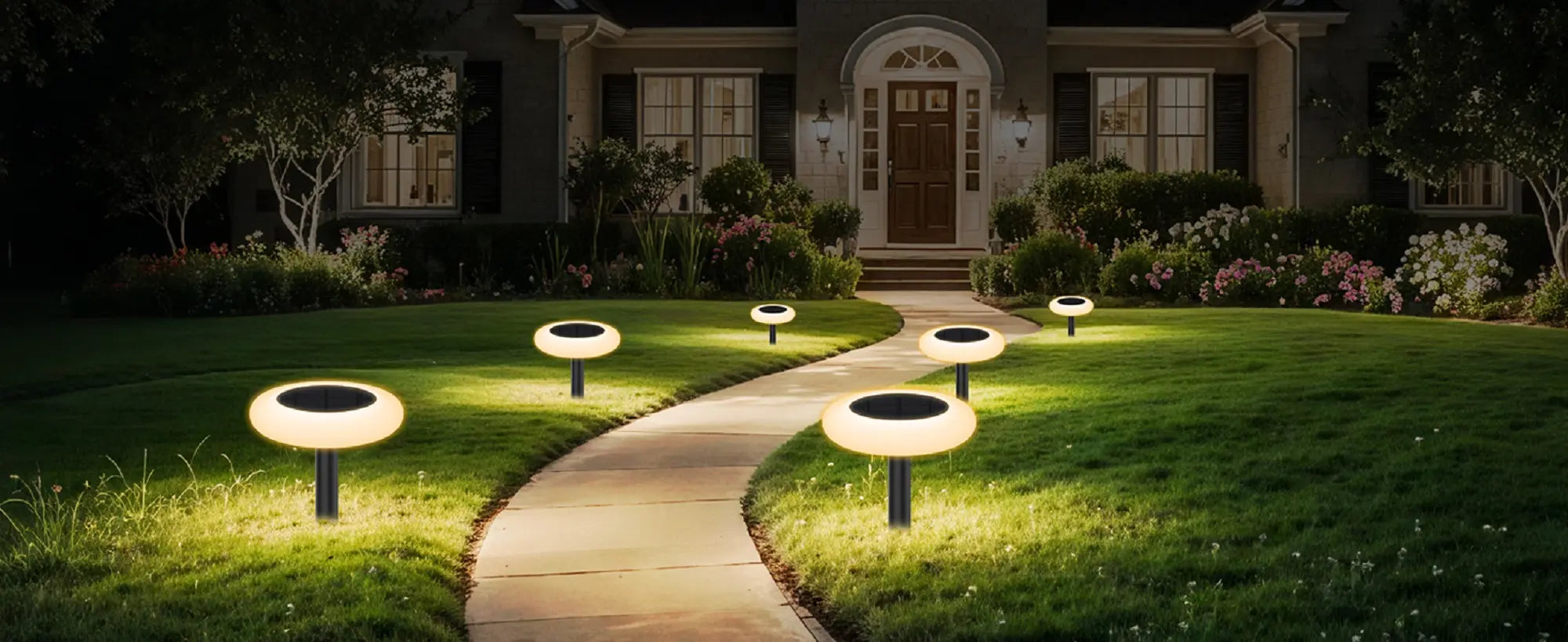
Consumer-grade solar lights often produce 10–150 lumens—fine for garden ambiance, useless for security.
This is where the "solar is only for accent lighting" myth comes from. It's accurate for cheap units. It's completely outdated for premium ones.
Placement Limitations
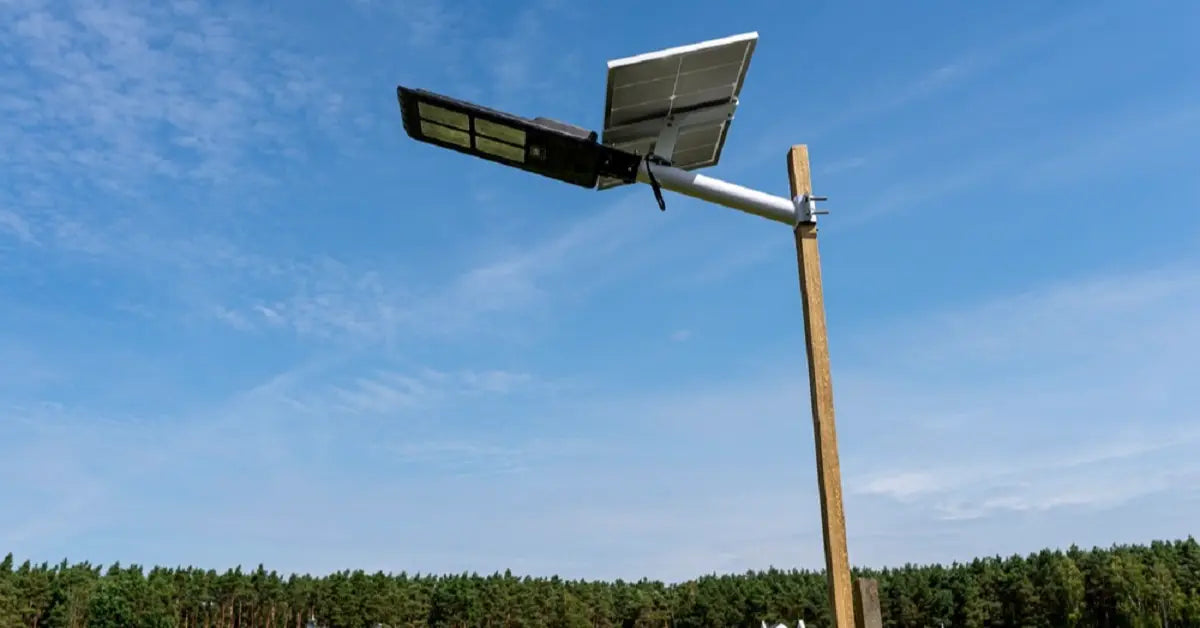
Most solar lights integrate the panel directly into the fixture. That forces a compromise: mount where the light is needed (shaded eaves, north walls) and the panel starves. Mount for sun and the light points the wrong way.
The fix: a separated panel design lets you position light and panel independently.
Battery Degradation
Budget units use NiMH batteries soldered in place. They suffer memory effect, fail in cold weather, and degrade within 2–3 years.
Look for Li-ion or LiFePO4 with replaceable cells. LiFePO4 handles thousands of charge cycles and cold temperatures without significant capacity loss.
Higher Upfront Cost for Quality
A $12 solar stake light performs like a $12 solar stake light.
Quality components cost more upfront—but still less than a single electrician visit, with zero operating costs afterward. Our breakdown of whether solar pays off covers the full numbers.
Why Your Old Solar Lights Failed

Most solar disappointments trace back to three component failures—not the technology.
- Amorphous panels — Low efficiency, rapid degradation
- NiMH batteries — Memory effect, poor cold performance
- Non-replaceable parts — One battery failure = full fixture disposal
Quality monocrystalline panels achieve 25–30% conversion efficiency and hold output in low-light conditions. Understanding the panel efficiency rule explains why panel quality matters more than panel size.
The Modern Solution: Engineering Fixes Every Con

The intelamp Solar Flood Light with Separate Panel was built to address each limitation directly.
Placement — solved Mount the light under shaded eaves. Position the panel in full sun. Independent placement, no compromise.
Weather dependency — solved An 8W monocrystalline panel (up to 30% efficiency) reaches full charge in 5 hours. The 8000mAh LiFePO4 battery sustains 3–5 cloudy days without recharging.
Brightness — solved 2,000 lumens covering 1,000 sq. ft. Dual 180° motion sensors detect up to 26 feet. Commercial-grade coverage, zero wiring.
Durability IP65 waterproof. 3 configurable lighting modes. LiFePO4 chemistry built for thousands of cycles.
intelamp holds a Guinness World Record for the largest display of solar-powered LEDs—earned by solving exactly these engineering challenges at scale.
Explore our full range of reliable solar outdoor lights across different output levels and mounting styles.
What to Look for Before You Buy
- Battery — LiFePO4 or Li-ion; replaceable cells only
- Panel — Monocrystalline only; avoid amorphous
- Lumens — 200–600lm for paths; 1,000–2,000lm+ for security
- IP rating — IP65 minimum for any outdoor use
- Panel design — Separated panel if your mounting location has shade
FAQs
Q: What is the downside of solar lights?
Three main issues: weather dependency, dim output in budget units, and battery degradation over time. All three are largely solved by monocrystalline panels, high-capacity LiFePO4 batteries, and separated panel designs.
The one limitation that remains: chronic year-round shade. If your property genuinely has no viable panel placement, hardwired systems are the more reliable choice.
Q: Why do solar lights fail so quickly?
Almost always a component issue—not the technology itself.
The usual culprits: recycled batteries that lose capacity within 18 months, low-efficiency amorphous panels, and non-replaceable designs that force full disposal when the battery dies.
Our guide on common solar failure causes covers each failure mode in detail.
Q: What is the 20% rule for solar panels?
It refers to conversion efficiency—what percentage of sunlight becomes usable electricity.
Amorphous panels: 8–12%. Quality monocrystalline: 20–30%. In practice, a better panel charges faster and performs meaningfully on overcast days where a cheap panel barely charges at all.
Q: Why are people getting rid of their solar lights?
Two reasons.
First, buyers purchase decorative units expecting security performance—a mismatch of specs, not a technology failure.
Second, non-replaceable batteries turn a simple $15 fix into a full fixture replacement. Both problems disappear with the right hardware: matched lumen output and a serviceable battery design.