

I appreciate you taking the time to find the right way to dispose of your old solar lights. It's not just about clearing out your garden shed—it's about being part of something bigger.
When you recycle properly, you're participating in what I call the "Cycle of Sustainability." You're ensuring valuable materials get recovered and reused. You're keeping hazardous waste out of our soil and water.
And honestly? That matters more than most people realize.
The Golden Rule: Never Throw Solar Lights in the Trash

Here's the thing that surprises most homeowners: solar lights aren't regular trash. They contain electronics and batteries that need special handling.
To dispose of solar lights, always remove the rechargeable batteries first and recycle them separately as hazardous e-waste. Never put batteries or the whole unit in regular trash.
I know it seems easier to just toss everything in the bin. But those rechargeable batteries contain chemicals like nickel, cadmium, or lithium. When these reach a landfill, they can leak into the soil and groundwater.
The environmental damage isn't immediate, but it's lasting. We're talking about contamination that affects local ecosystems for years.
A Step-by-Step Guide to Recycling Solar Lights

Let me walk you through the proper disposal process. It's simpler than you might think.
Step 1: The Battery Extraction (Crucial Safety Step)
Before anything else, you need to remove those rechargeable batteries. Most solar lights use Nickel-Metal Hydride (NiMH) or Lithium-ion (Li-ion) batteries. Some older models still have Nickel-Cadmium (NiCd) batteries.
All of these are hazardous materials. They should NEVER go in your regular trash.
Here's what I do: After removing the batteries, I keep them in their original packaging or place them in a non-conductive container. Then I contact my local e-waste center for specific drop-off instructions.
⚠️ Warning: Never throw batteries in fire or regular garbage bins. Lithium batteries can ignite if punctured or crushed, creating serious safety hazards.
Step 2: Check the Light Unit (Donate vs. E-waste)
Before you dismantle everything, ask yourself: does this light still work?
If the unit is functional or just needs a new battery, consider passing it along. I've donated working lights to community gardens and local charities. You can also list them on Buy Nothing groups or offer them to neighbors.
Sometimes the most sustainable choice is giving something a second life elsewhere.
If the light is truly broken, save the fixture components for e-waste recycling. The printed circuit boards, photoresistors, and photocells all contain materials worth recovering.
Step 3: Sorting Components (Plastic, Glass, Metal)
Disassembly helps specialized recycling facilities process each material properly. If you have the time, separate these parts:
LED bulbs contain trace amounts of aluminum and other non-renewable materials. Plastic casings can often be recycled with household plastics, depending on your local rules. Metal fixtures like stakes and brackets are usually accepted in metal recycling programs.
Not every recycling center requires this level of sorting. But when you separate components, you're making their job easier and improving recovery rates.
Step 4: Finding Your Local Drop-Off
Your best bet is finding a local e-waste recycler or hazardous material collection center. Check your municipal website or waste management authority for electronic waste programs.
Many retailers also help out. Staples and Best Buy both offer e-waste recycling programs at their stores. Some even accept batteries at dedicated collection bins near the entrance.
For battery-specific recycling, I recommend checking Earth911 or Call2Recycle. These websites let you search by zip code for nearby drop-off locations.
Why Improper Disposal Matters: Protecting Your Garden Ecosystem

Let me paint a picture of what happens when solar lights end up in landfills.
Those batteries I mentioned earlier? They contain heavy metals like nickel, cadmium, and lithium. When batteries break down or leak, these chemicals seep into the surrounding soil.
Cadmium is particularly nasty. It disrupts soil pH levels and gets absorbed through plant root systems. If you're growing vegetables or ornamental plants nearby, this contamination can affect their health and growth.
The groundwater contamination is just as concerning. Once these toxins enter the water table, they spread far beyond the original disposal site. They can impact entire communities and natural ecosystems.
Understanding how toxins affect garden plants helps you see why proper disposal isn't optional—it's essential for environmental health.
Reduce Future Waste: Choosing Sustainable Replacements

The best way to prevent future e-waste? Buy products built to last.
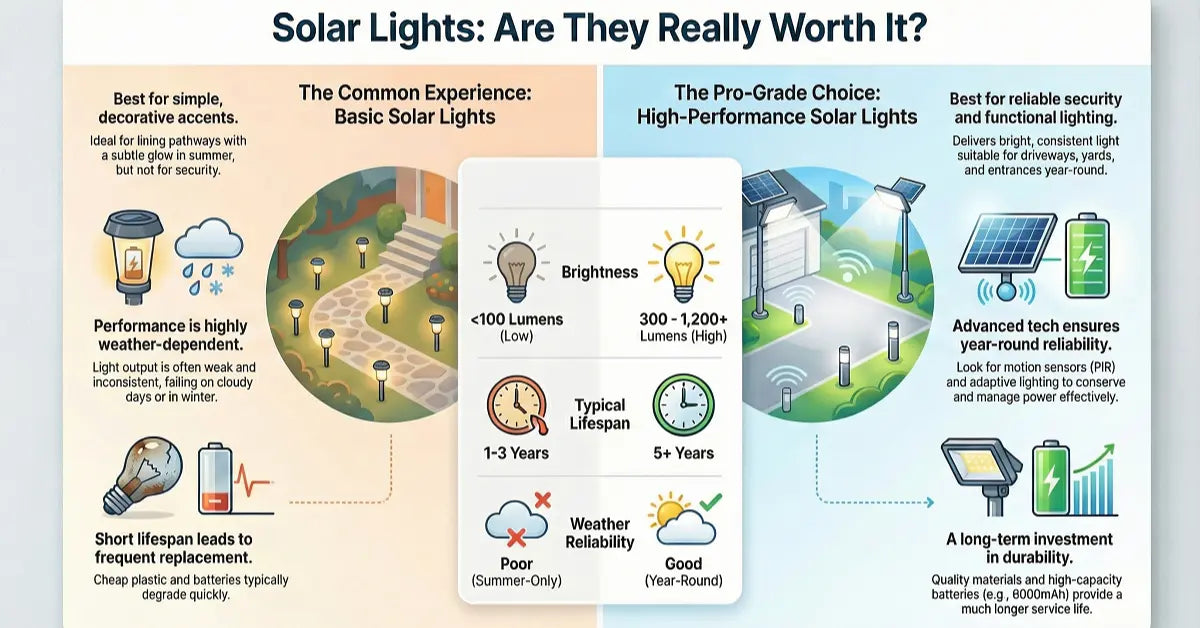
Look for Longevity (Why 4000mAh Batteries Reduce Waste)
I always tell people to check battery capacity when shopping for solar lights. A high-capacity 4000mAh LiFePO₄ battery can last years longer than cheaper alternatives.
Products with IP65 waterproof ratings also reduce replacement frequency. They withstand rain, snow, and humidity without degrading quickly.
When your lights last longer, you create less waste. It's that simple.
Look for Certifications (Climate Pledge Friendly & Global Recycled Standard)
True sustainability starts at the manufacturing stage. I look for products certified by the Global Recycled Standard because they contain recycled materials instead of newly extracted resources.
Choosing certified products means you're supporting a circular economy. You're voting with your wallet for companies that prioritize environmental responsibility.
The Intelamp 1300LM Solar Floodlight exemplifies this approach. It's Climate Pledge Friendly and contains at least 50% recycled material.
But it goes beyond just recycled content. These lights are made with safer chemicals and manufactured in facilities that ensure worker well-being. That's holistic sustainability—considering environmental impact and human welfare.
Explore Long-Lasting, Eco-Friendly Lighting
If you're in the market for new outdoor lighting, I encourage you to browse our durable solar lighting collection. Every product is designed for minimal environmental impact and maximum longevity.
We're not just selling lights. We're offering a way to illuminate your outdoor spaces without compromising your values.
FAQs
What can I do with old solar lights?
If they still work, get creative! You can repurpose the fixtures as decorative jar lights or planters. Donate them to friends, family, or community organizations.
For broken lights, dismantle them and recycle the components through an e-waste facility. The batteries and electronics must go to specialized recyclers to prevent environmental contamination.
Can you put old solar lights in the bin?
No, you should avoid placing solar lights in regular trash bins. They contain rechargeable batteries with hazardous chemicals and electronic components that belong in e-waste recycling centers.
Regular landfills aren't equipped to handle these materials safely. The risk of soil and water contamination is too high.
What to do with solar string lights?
Solar string lights follow the same disposal rules as other solar products. Remove any easily separable batteries first, as they're classified as hazardous materials.
The remaining wiring and fixtures should go to a recycling center that handles electronic waste. Many e-waste facilities accept decorative lighting along with other electronics.
Final Thoughts
Disposing of solar lights responsibly isn't complicated. It just requires a little awareness and effort.
Remove the batteries. Sort the components when possible. Find your local e-waste recycling center.
And when you're ready to replace those old lights, choose products designed for longevity and sustainability. Your garden—and the planet—will thank you for it.
Featured Articles
Are Solar Lights Worth It? The Truth About Cheap vs. Pro Models
Why Do Solar Lights Stop Working? The Ultimate DIY Troubleshooting and Fix Guide

1 comment
Mary Bancroft
They should make it easier to remove batteries so I can put new ones in! Duh! Of course they just want you to buy new ones what a waste!
They should make it easier to remove batteries so I can put new ones in! Duh! Of course they just want you to buy new ones what a waste!