I've spent enough time around photovoltaic materials to know that "clean energy" and "toxic chemicals" don't usually get mentioned in the same breath. But they should be. Solar panels do contain trace heavy metals, and pretending otherwise doesn't help anyone make a good decision.
So let's actually look at what's inside one, and what happens when it wears out.
The Bottom Line
Solar panels are non-toxic while they're running. The cells sit sealed behind glass for their entire 25- to 30-year lifespan, so nothing leaks into your air, soil, or water. They do contain trace lead solder (in crystalline panels) or cadmium (in some industrial thin-film panels), which is exactly why recycling them properly at the end matters.
Why a Working Panel Doesn't Leak Anything

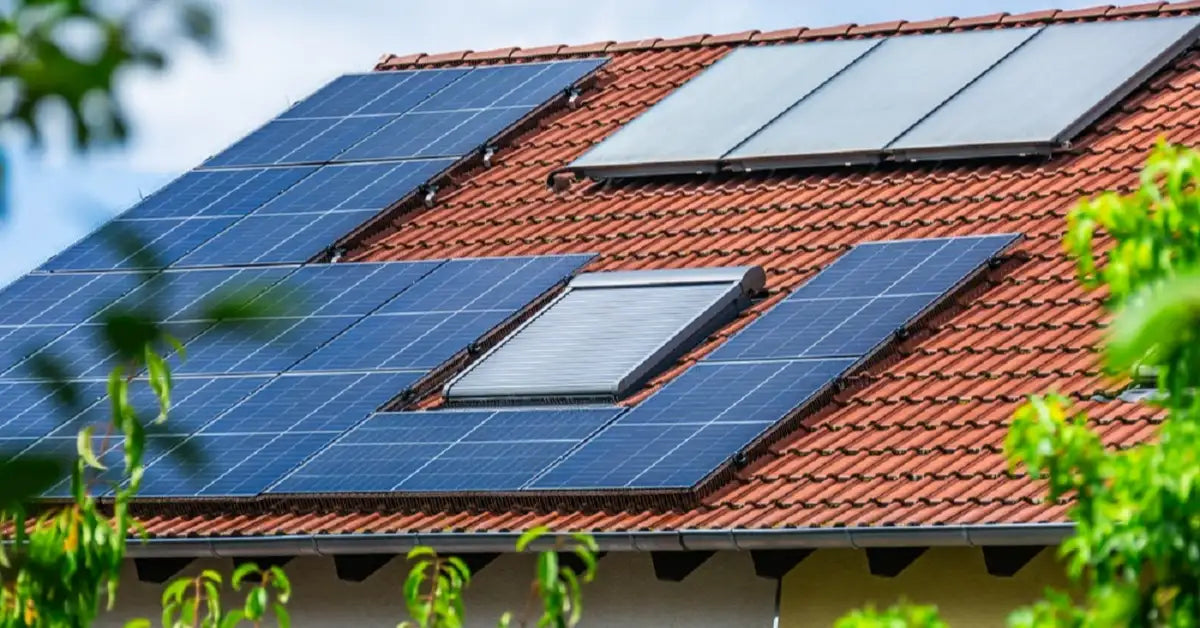
Think of a solar panel as a sealed sandwich. The photovoltaic cells sit laminated between layers of tempered glass, or in small garden fixtures, tough acrylic and ABS plastic. That seal is bonded under heat and pressure, and it's watertight.
This is the same idea behind how solar lights work in your yard. The electronics stay dry by design, not by luck. Even a hard rainstorm or a flooded flowerbed won't pull anything out of an intact panel.
Cracked glass is a different story. It can hurt weatherproofing over time. But it still doesn't cause the kind of chemical leaching people picture when they hear "toxic."
Two Very Different Chemistries
Most of the toxicity worry gets lumped together, but there are really two separate technologies here. And they don't belong in the same conversation.
Monocrystalline and polycrystalline silicon is what's in almost every home rooftop system and garden light you'll ever buy. It makes up the vast majority of the market. These cells use a small amount of lead-based solder to connect internal wiring — a modest amount, especially next to what sits in a regular car battery — and it's fully locked inside the laminate.
Cadmium Telluride (CdTe) thin-film is a different animal entirely, and it's almost exclusively used in utility-scale solar farms. Cadmium is a legitimate heavy-metal concern on its own. But in telluride form, it's chemically stable and doesn't dissolve easily in water, which keeps leaching risk low even if a panel gets damaged.
If you're checking whether solar lights are safe for your own yard, here's the short version: home and garden monocrystalline panels contain zero CdTe. That cadmium conversation simply doesn't apply to them.
For anyone who wants the source material, the SEIA PV Toxicity Factsheet and the EPA's guidance on end-of-life solar panels are both solid places to dig deeper.
What Happens When a Panel Dies

Every panel eventually retires, usually somewhere around 20 to 25 years in. At that point it becomes solid waste, and the law has a specific test to decide what category it falls into.
Under the federal Resource Conservation and Recovery Act (RCRA), a panel only counts as hazardous waste if it fails something called the Toxicity Characteristic Leaching Procedure, or TCLP. That test crushes the panel and soaks it in an acidic solution to see how much metal leaches out under the worst conditions imaginable. Most modern silicon panels pass and get classified as non-hazardous.
That doesn't mean skip recycling, though. Non-hazardous isn't the same as "landfill it and forget it." Good recycling programs now recover most of a panel's material:
- Glass and aluminum, which make up most of the weight, get reprocessed easily.
- Silicon and silver, the high-value stuff, can go straight back into new cells.
- Copper and other conductors get pulled out for reuse in wiring.
If you've got an old system on its way out, there are proper disposal routes built specifically to keep this stuff out of landfills.
The Real Culprit Was Never the Panel — It Was the Battery

Here's something I think gets missed a lot. When older solar garden lights got a bad reputation for being "toxic," it usually wasn't the panel causing the problem. It was the battery.
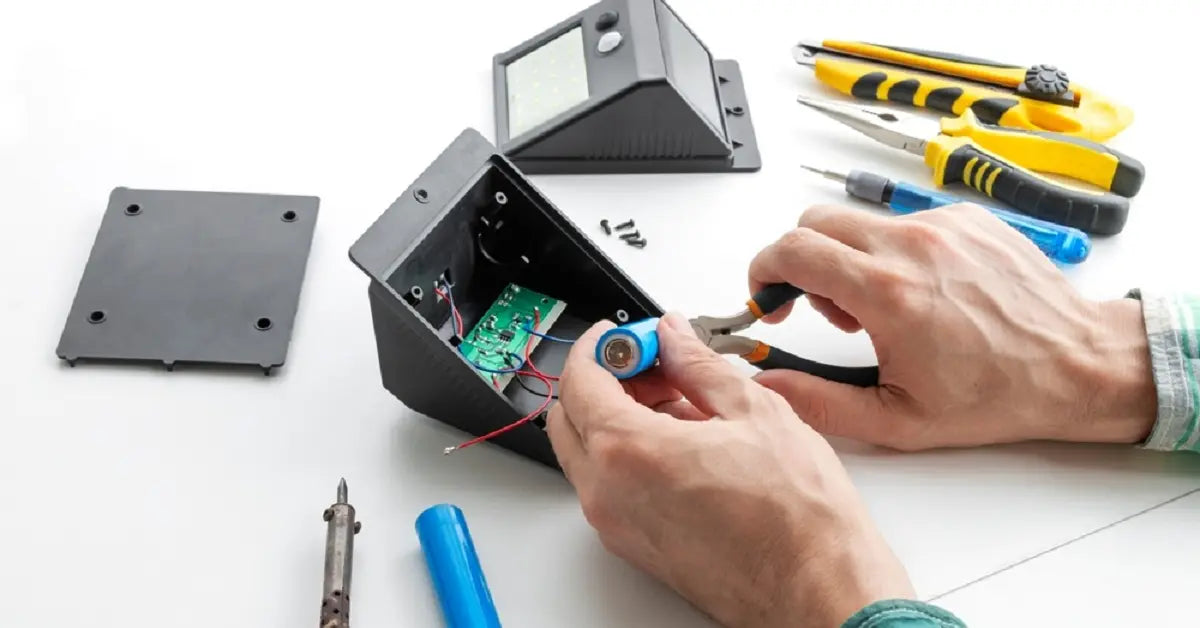
Early solar fixtures ran on Nickel-Cadmium (NiCd) batteries. Those do contain heavy metals, and if the casing corrodes and lets moisture in, that's where contamination risk actually shows up.
Most newer fixtures have moved to Lithium Iron Phosphate (LiFePO4) instead. No cobalt, no cadmium, and it holds up better under repeated temperature swings than older lithium-ion chemistries. That's a meaningful upgrade for anything sitting outside year-round.
What This Means for Your Garden

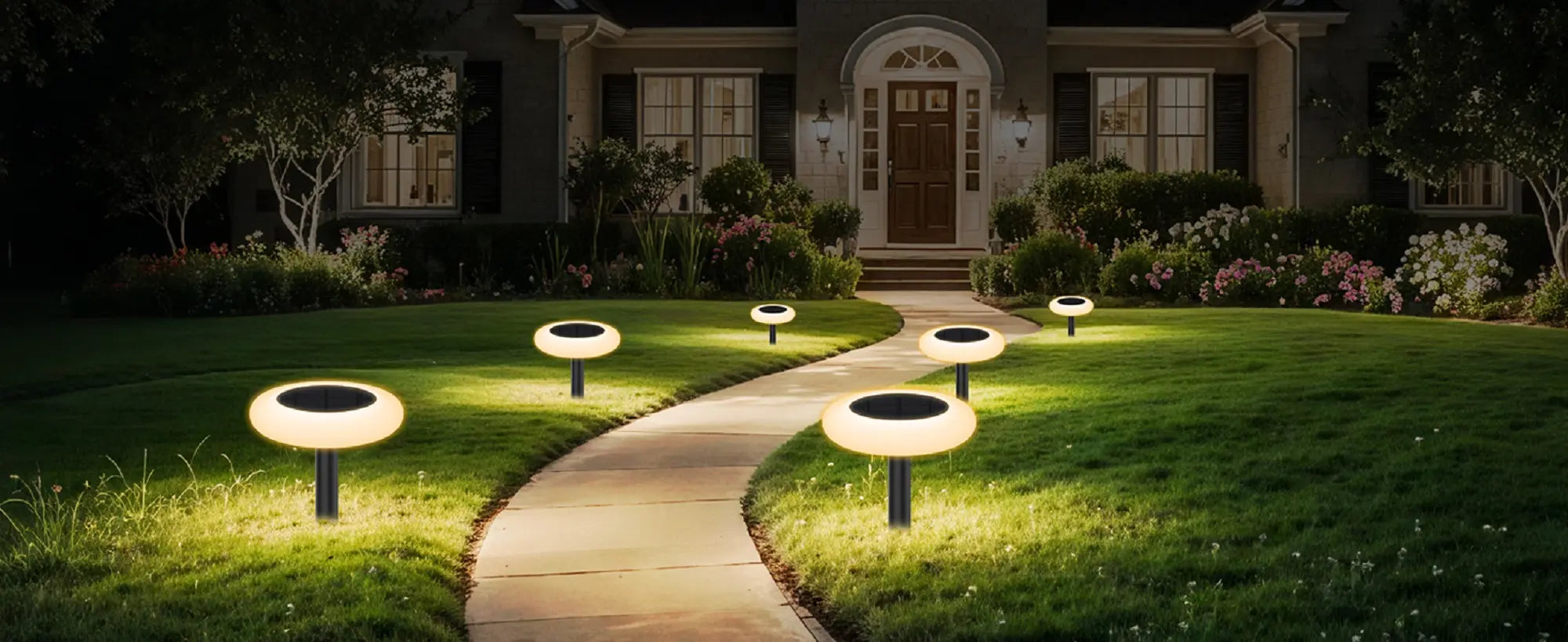
If you're lighting up a vegetable bed, a chicken coop, or a flower border, here's the practical question: can a small solar light actually hurt what's growing nearby? A monocrystalline panel sealed in acrylic or ABS has no liquid components and nothing that seeps through intact casing. Even a cracked shell won't dissolve into the soil the way a corroding battery casing might.
That's really the design logic behind something like the intelamp Solar Flood Lights Outdoor Waterproof, 4000mAh Linkable Security Floodlight (check it out here). It pairs a monocrystalline panel sealed in an IP65 waterproof ABS shell with a 4000mAh LiFePO4 battery — no cadmium, lead, or cobalt — good for over 12 hours of runtime.
You can link units wirelessly up to 25 meters apart, and it uses dual 180° motion sensors with 240° double-sided coverage, plus dusk-to-dawn automation and 2/6/12-hour timer settings, so you're not burning battery life lighting up nothing.
Worth mentioning: intelamp holds a Guinness World Record for the largest display of solar-powered LEDs, which tells you something about how these components hold up at real scale.
If you're still deciding between solar lights and needing extra batteries, or wondering if solar lighting is even worth it, those are good next reads once you've got the safety question settled.
Frequently Asked Questions
Are there any health risks with solar panels?
No documented risks exist for people or pets living near them. A sealed, working panel doesn't give off fumes, radiation, or chemical runoff.
Why are people getting rid of their solar panels?
Usually it's because the system hit the end of its 25-year warranty, or the owner wants newer, more efficient tech. It's rarely a safety concern.
Is it safe to live near solar panels?
Yes. They're mostly glass, aluminum, and silicon — the same materials in plenty of household electronics and building products.
Is it true that solar panels are bad for the environment?
Manufacturing takes energy and some trace metals, sure. But panels typically pay back that carbon footprint in 4 to 8 months of use, and over their full lifespan, they're a clear net win against fossil fuels.