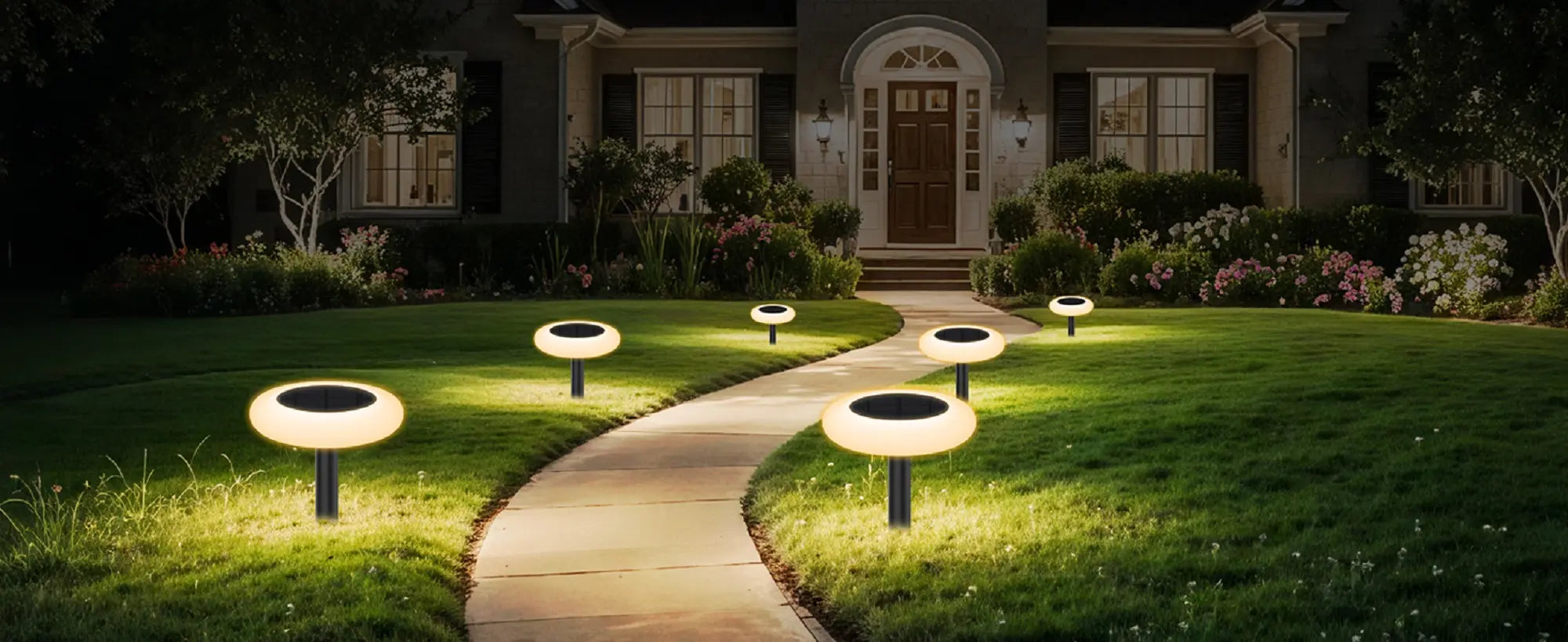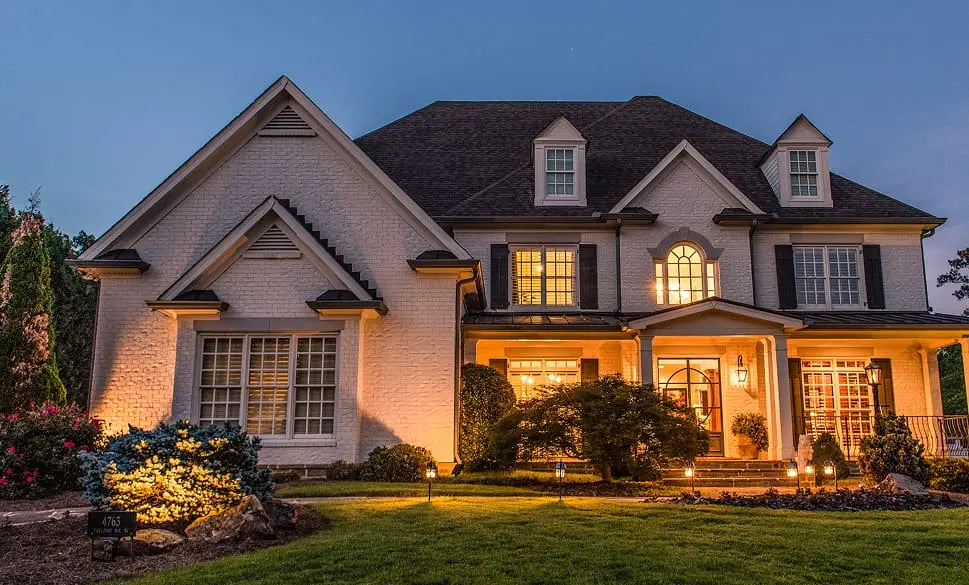

The right color temperature doesn't just change how your yard looks — it changes how it feels. Warm light makes a patio feel like somewhere you want to stay. Cool light makes a driveway feel like somewhere you can see clearly. Both matter. The question is knowing which one to use where.
The Bottom Line
| Scenario | Best Choice | Why |
|---|---|---|
| Patio / deck / garden | 3000K warm white | Relaxed ambiance, easy on the eyes |
| Driveway / garage / pathways | 4000K neutral white | Better contrast and visibility |
| High-security zones | 5000K–6500K cool white | Maximum alertness and clarity |
| Near seating or entryways | 3000K | Less insect attraction, IDA-compliant |
| Multi-purpose areas | Selectable CCT fixture | Switch modes as needed |
What 3000K Actually Looks Like

3000K is warm white — close to the glow of a traditional incandescent bulb or a sunset. It sits at the lower end of the practical outdoor Kelvin range, and that's intentional.
In residential settings, 3000K does something cooler light can't: it makes natural materials look better. Wood tones deepen. Stone and brick take on more warmth and texture. Your front porch looks like a home, not a parking structure.
There's a practical side to this too. Warm white light contains less blue and UV wavelength content, which means it attracts significantly fewer insects than cooler alternatives. For anyone who's sat under a bright cool-white porch light in summer, this alone can be a deciding factor.
3000K is also the maximum color temperature recommended by the International Dark Sky Association (IDA) for residential use. If you're in an area with dark sky ordinances — or just care about light pollution — this is the compliant choice.
What 4000K Actually Looks Like

4000K is neutral white. It's crisper, cleaner, and closer to natural daylight than 3000K. The light it produces has higher perceived contrast, which means edges are sharper and detail is easier to resolve.
That makes it the practical choice for functional zones: driveways, side gates, garages, and walkways where you need to see clearly rather than feel comfortable. It's also better at distinguishing colors under artificial light — useful if you need to identify a person or read a license plate.
One important caveat: 4000K in a seating area tends to feel clinical. It works for the garage. It's the wrong call for the patio dinner.
The Engineering Reality: Does Color Temperature Affect Battery Life?

This is a question I don't see addressed often enough. The short answer is yes — cooler LEDs are generally 10–15% more energy-efficient than warm white LEDs at the same lumen output.
The reason is phosphor layer density. Warm white LEDs use a thicker phosphor coating to shift blue LED light into warmer tones. That conversion isn't lossless — some energy is absorbed in the process. Cooler LEDs have a thinner coating and convert electricity to visible light more directly.
For solar-powered fixtures, this matters. Running a 6500K mode instead of 3000K can extend runtime slightly on the same battery charge. It's not dramatic, but on short winter days when charging hours are limited, efficiency compounds. This is one of the less obvious factors when thinking about outdoor solar light selection overall.
The Professional Approach: Use Both

Most well-designed residential lighting schemes don't commit to a single color temperature. They blend them by zone.
- Close to the house (porches, patios, garden beds): 3000K for warmth and comfort.
- Perimeter and navigation (driveways, gates, path edges): 4000K for clarity and function.
- High-security zones (rear entry, detached structures): 5000K–6500K where maximum visibility matters more than aesthetics.
The challenge is that this traditionally meant buying separate fixtures. Modern selectable CCT lights change that — one unit, multiple modes, switchable by remote.
The intelamp Solar Motion Sensor Light handles this well. It supports both 3000K warm white and 6500K daylight modes, switchable via a handheld remote — so you're not locked into one temperature at install time. The 1,200 lm output pairs with a 180° radar detection sensor covering a 26-foot range, which is wide enough to cover most driveways and entry zones without blind spots.
The 25% efficiency monocrystalline panel charges reliably even on overcast days, and the IP65 ABS housing handles year-round weather exposure. The remote also adjusts timer modes and brightness — genuinely useful for fixtures mounted high or in hard-to-reach spots. If you want to compare it against other options, intelamp's best-selling outdoor lights cover multiple output and temperature configurations.
A Note on Common Mistakes

Color temperature is one spec — but getting the placement wrong undermines even the best fixture. Mounting a 3000K light directly above a seating area at close range creates uncomfortable downward glare. Positioning a 4000K security light facing a bedroom window creates unwanted intrusion inside the house.
These are among the most frequent outdoor lighting mistakes I see, and most are easily avoided with a bit of planning before installation.
Also worth noting: cooler color temperatures do attract more insects. If your 4000K pathway light is right next to your front door, you may be inviting more bugs inside. A warm 3000K fixture near entry points is a smarter call for that reason alone.
FAQs
Is 3000K too yellow for outdoor lighting?
No. 3000K reads as soft golden-white, not noticeably yellow. It's the standard for residential ambiance lighting and looks natural against wood, stone, and brick. It only appears yellow in direct comparison to cooler light sources placed nearby.
Is 4000K good for outdoor use?
Yes, for functional zones. Driveways, garages, and navigation paths benefit from the contrast and clarity 4000K provides. Avoid it for seating areas or anywhere you want a relaxed atmosphere — it tends to feel too clinical in those settings.
Is 3000K or 5000K better for outdoor lighting?
Depends entirely on the goal. 3000K is better for aesthetics, comfort, and wildlife-friendliness. 5000K is better for high-visibility security zones where you need maximum contrast and alertness. For most residential properties, a mix of both across different zones gives better overall results than committing to either alone.
What is the best LED color temperature for outdoor lighting?
3000K is the most broadly recommended for residential use — comfortable, IDA-compliant, and less attractive to insects. For security-focused areas, 4000K–6000K performs better. A selectable CCT fixture that handles both gives you the most flexibility without buying multiple products.
intelamp holds a Guinness World Record for the largest display of solar-powered LEDs — engineering credibility that carries through to the precision of their color temperature and output specs.